
PRACTICAL RATCHET STRAP GUIDE
How to Use Ratchet Straps
A practical guide to threading, tensioning, releasing and using ratchet straps correctly across transport, industry, construction, events and marine environments.
Ratchet straps are simple to operate, but safe load restraint requires more than feeding webbing through a ratchet and pulling the handle tight. Correct use begins with selecting the right restraint method, positioning the strap properly and checking the complete system before tension is applied.
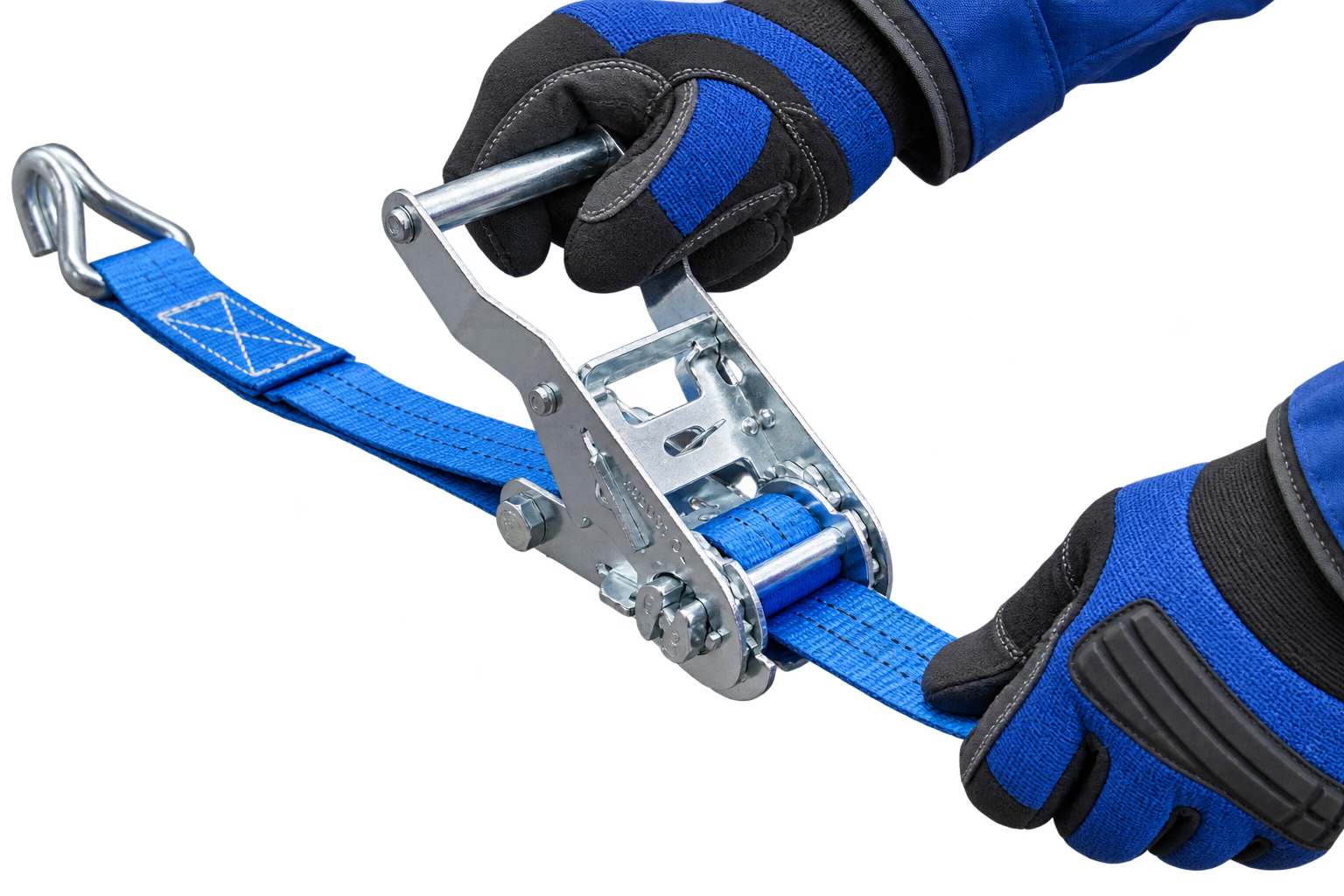
Before you start
Before tensioning any ratchet strap, carry out these six quick checks. They help prevent incorrect setup, damaged equipment and unsafe load restraint.

Inspect the strap
Check the webbing, stitching, ratchet and end fittings for cuts, wear, distortion or other damage.

Check the label
Check the webbing, stitching, ratchet and end fittings for cuts, wear, distortion or other damage.

Check anchor points
Use secure, suitable anchor points that are compatible with the selected hooks or end fittings.

Protect sharp edges
Use appropriate edge or corner protection where the webbing could be cut, crushed or abraded.
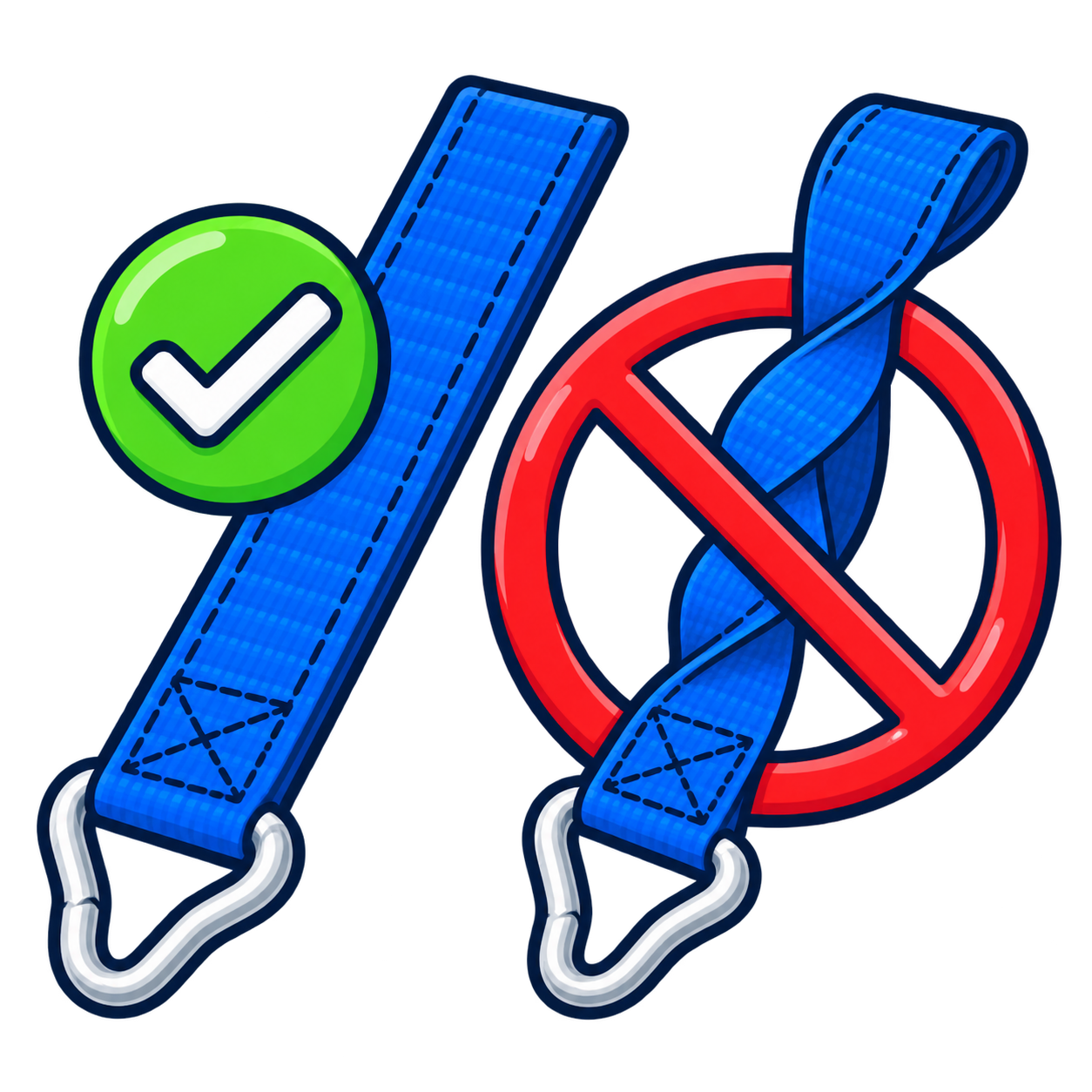
No twists
Keep the webbing flat and correctly routed. Twisted webbing can sit badly and suffer uneven loading or wear.
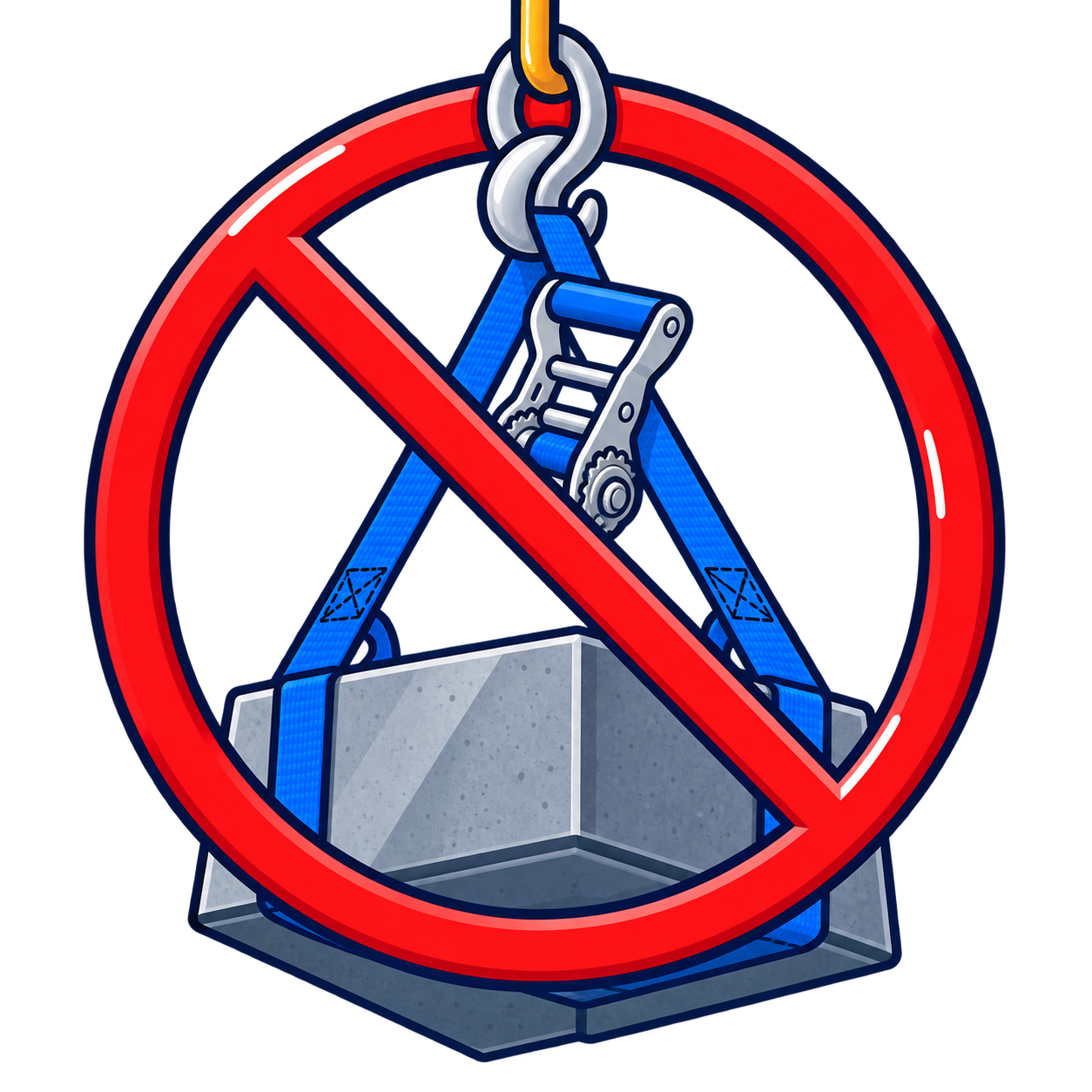
Never use for lifting
Ratchet straps are for load restraint only. They must not be used to lift, suspend or support a load.
Anatomy of a ratchet strap
A standard two-part ratchet strap consists of a short fixed section attached to the ratchet mechanism and a longer adjustable section that passes through the ratchet spindle. Understanding the main components makes threading, tensioning and inspection much easier.
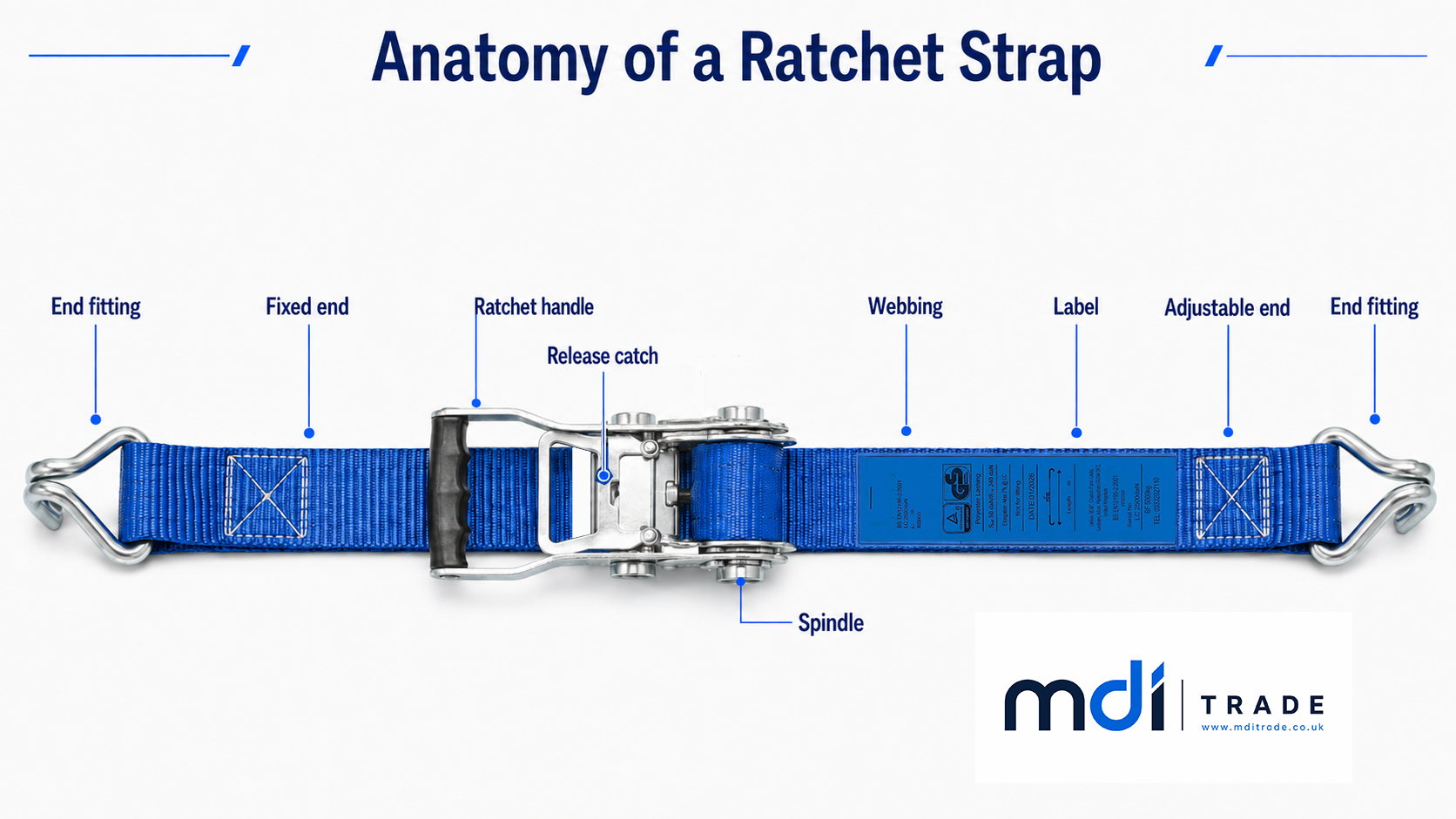
1. Ratchet handle
Check the webbing, stitching, ratchet and end fittings for cuts, wear, distortion or other damage.
2. Spindle
The adjustable webbing passes through the spindle slot and winds around it as the ratchet is operated.
3. Release catch
The release mechanism disengages the ratchet so the handle can open fully and the webbing can be removed..
4. Fixed end
The shorter section of webbing permanently attached to the ratchet mechanism, normally terminating in an end fitting.
5. Adjustable end
The longer section of webbing that passes through the ratchet and provides the working adjustment for the restraint.
6. Label
The sewn-in label identifies important rating and product information including LC, STF, webbing material and traceability details.
The exact shape of the ratchet, hook and webbing configuration varies between products, but the operating principle is the same.
How to use a ratchet strap — step by step
The basic operating principle is simple, but each stage matters. Follow these six steps to position, thread, tension and secure a ratchet strap correctly.
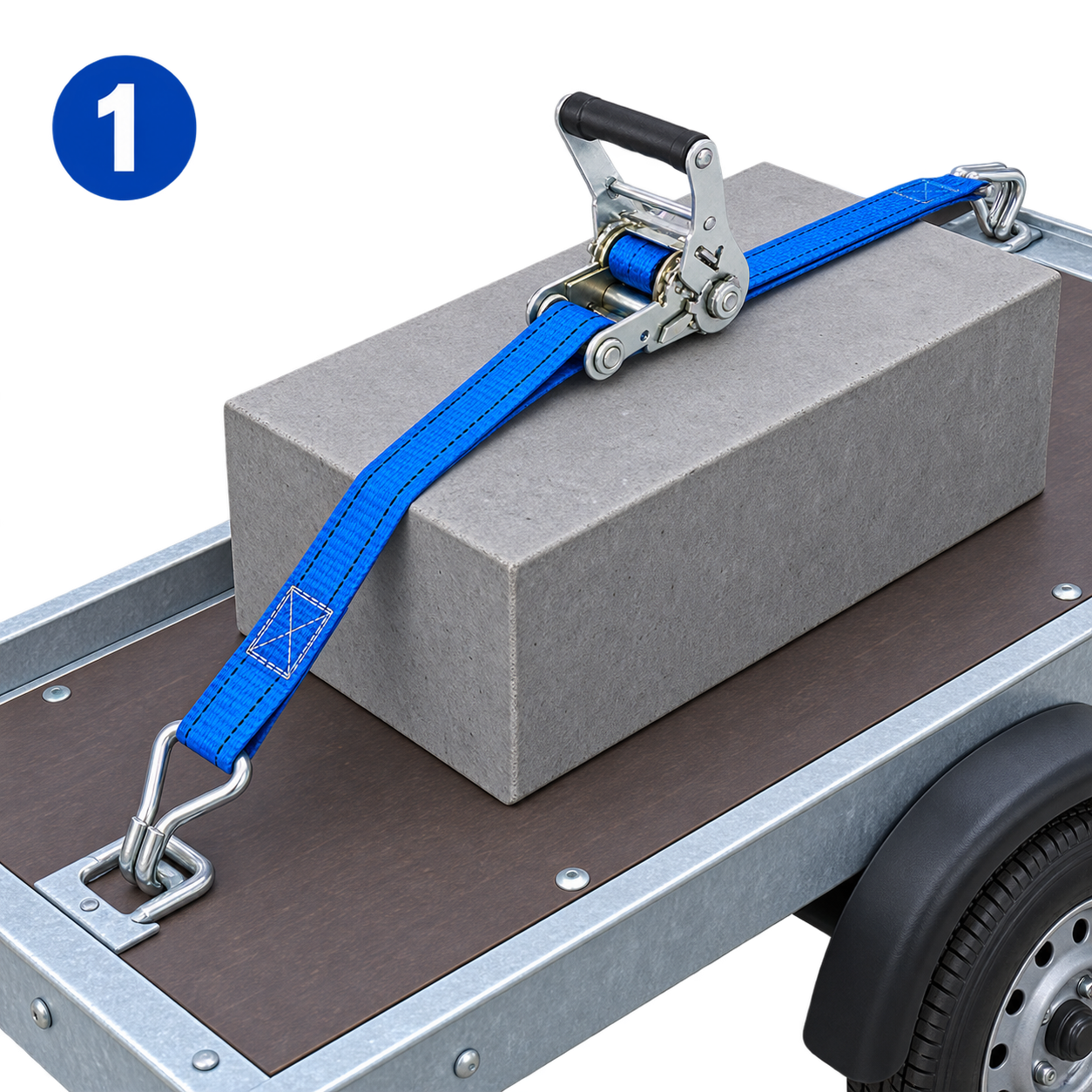
1. Position the strap
Route the webbing over, around or directly to the load according to the intended restraint method. Keep the strap flat, avoid twists and check that it does not pass across an unprotected sharp or abrasive edge.
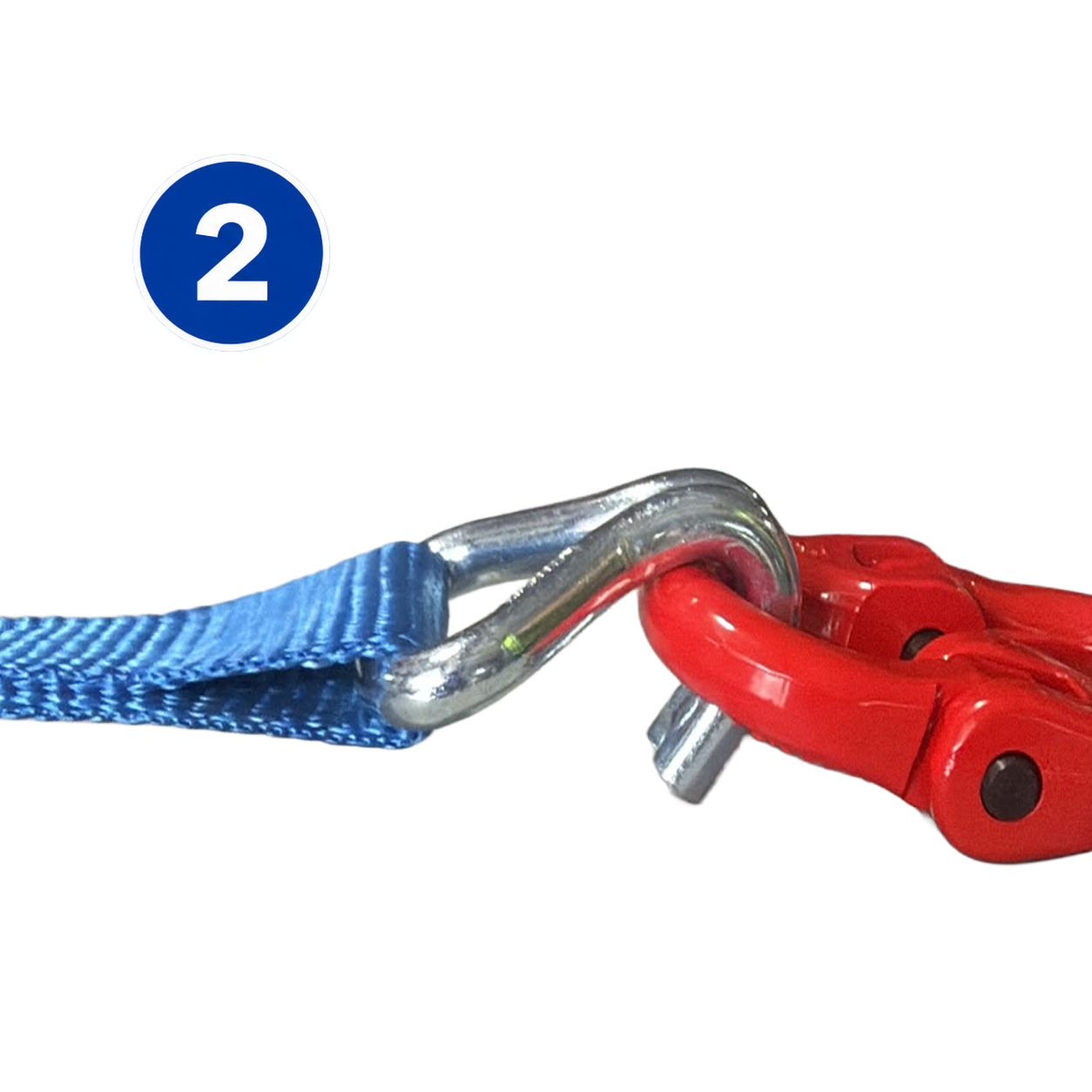
2. Attach the end fittings
Connect both end fittings to suitable anchor points. Hooks should seat properly and should not be balanced on their tips, forced into an incompatible fitting or attached to a structure that is not suitable for load restraint.
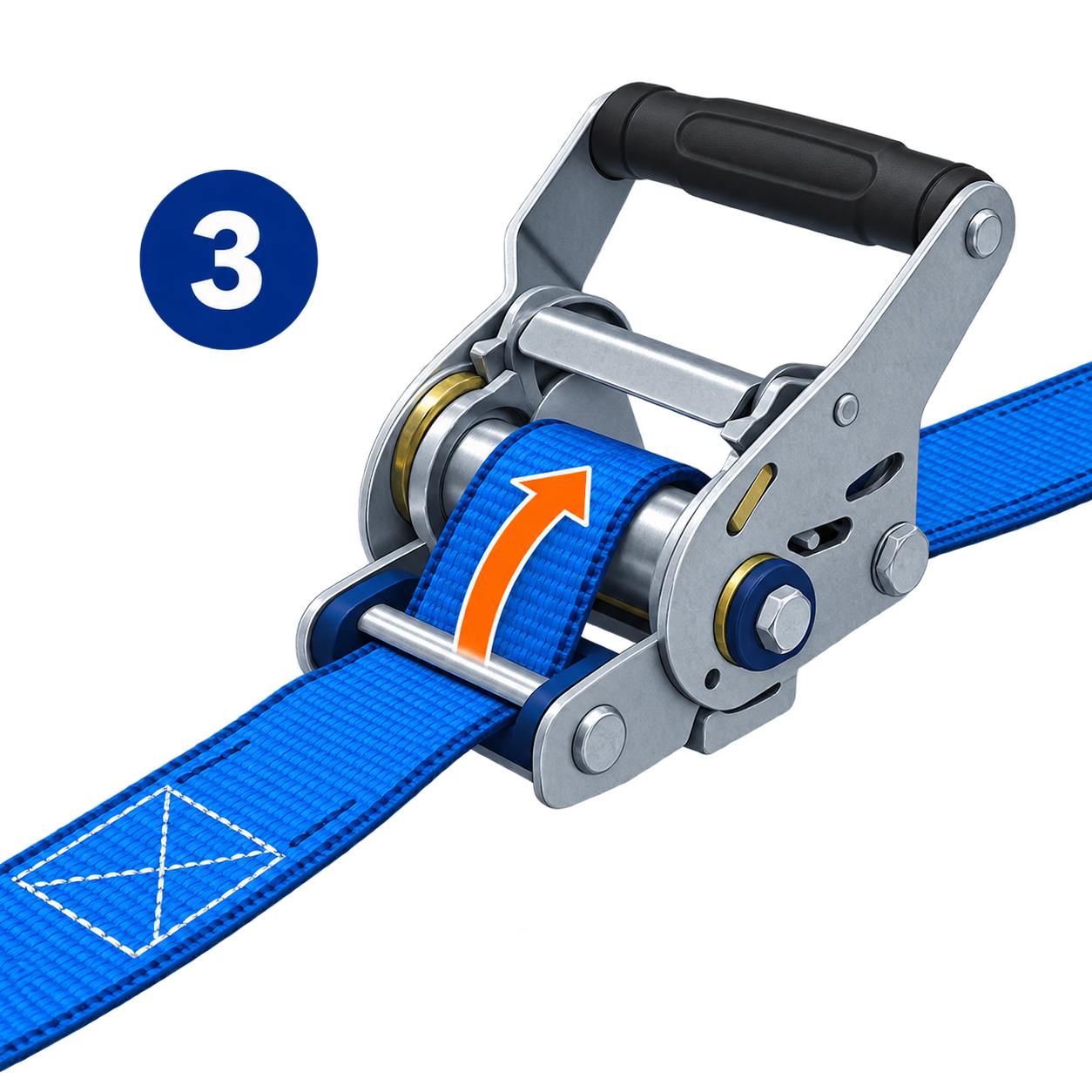
3. Thread the webbing through the ratchet
Open the ratchet sufficiently to expose the slot in the spindle. Feed the adjustable webbing through the spindle slot and pull most of the slack through by hand before you begin tensioning.
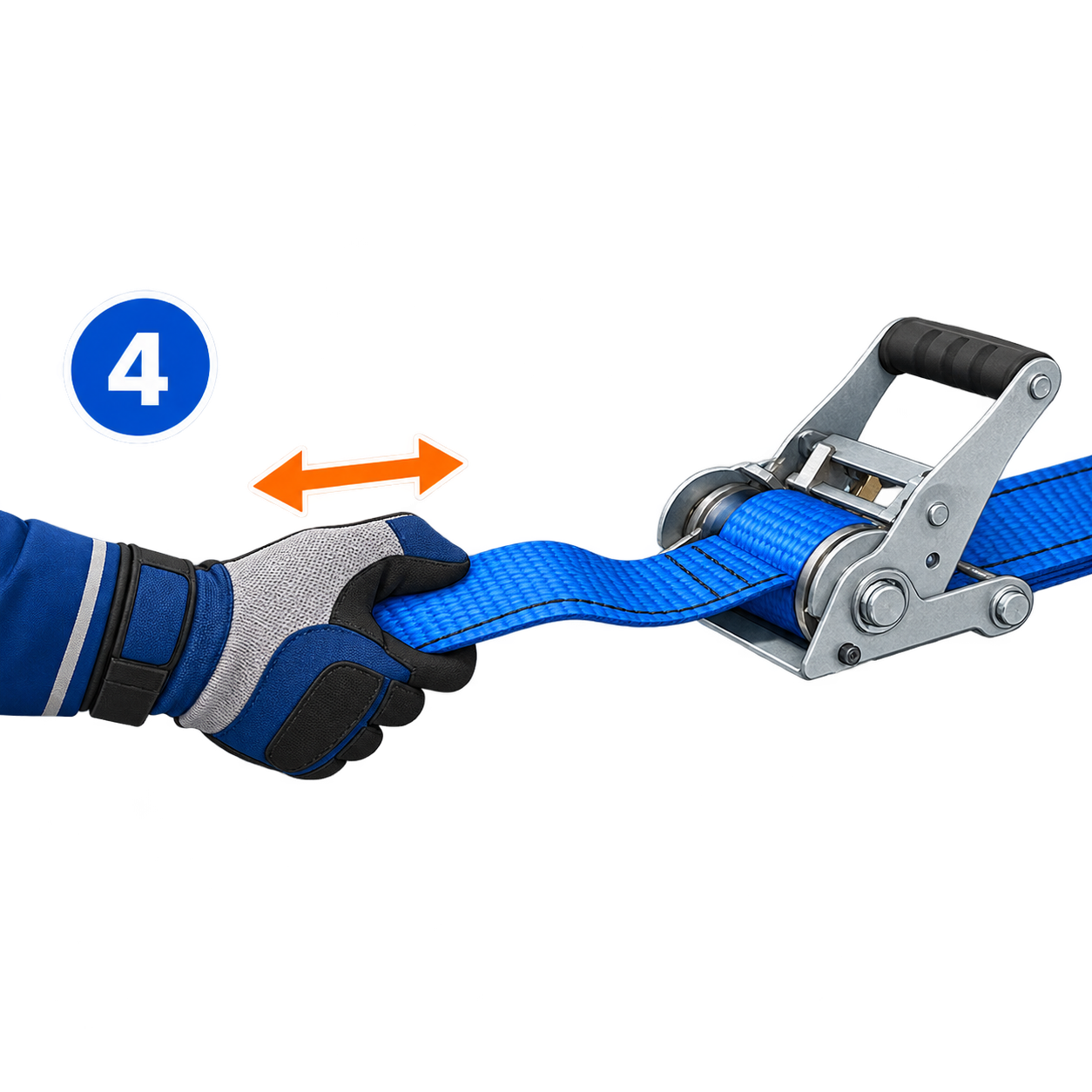
4. Remove the slack and tension the strap
Pull the free webbing through by hand until the strap is reasonably snug. Then operate the ratchet handle backwards and forwards to wind the webbing onto the spindle and apply the required tension.
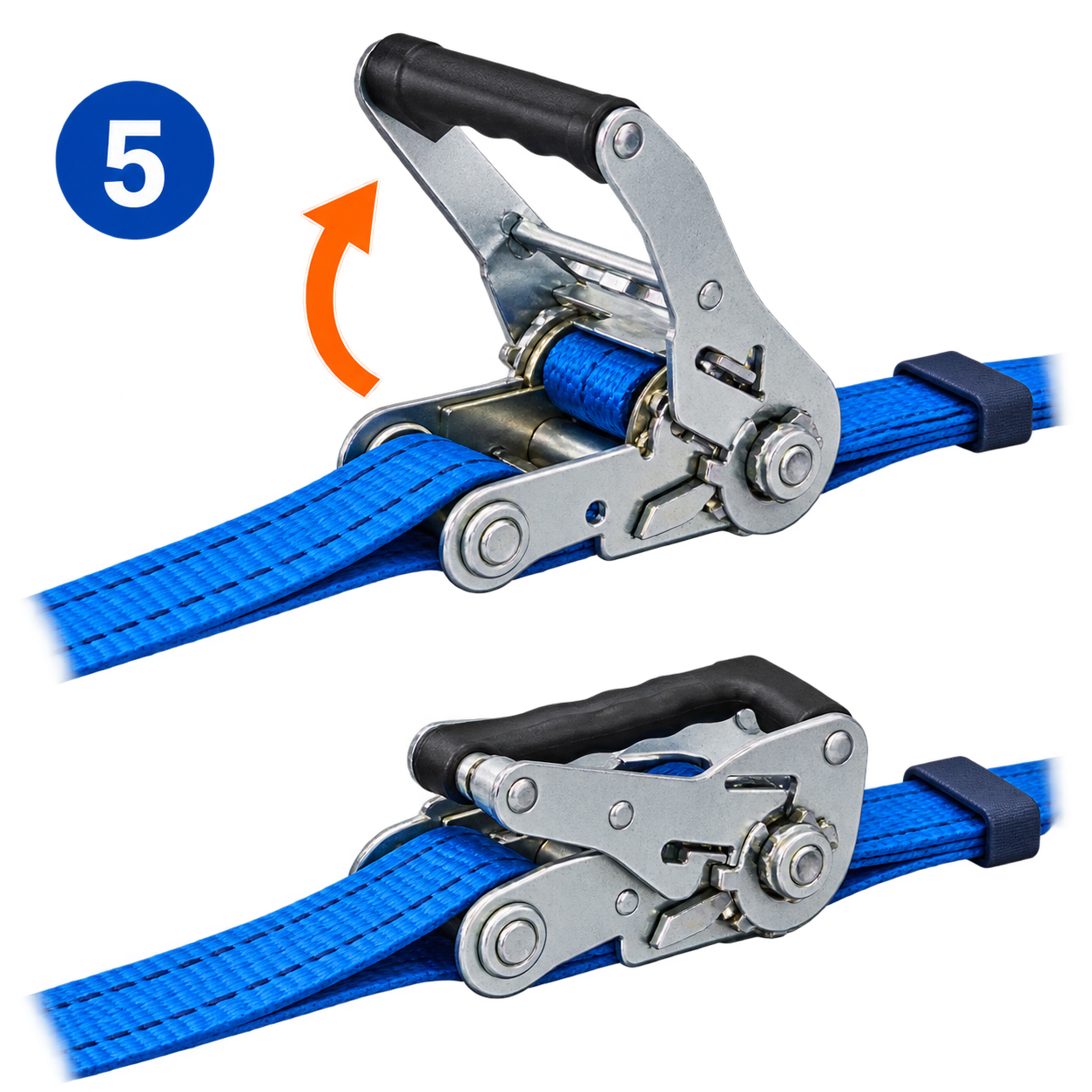
5. Close and lock the ratchet
Once the required tension has been achieved, return the ratchet handle fully to its closed position. The mechanism should lock securely so it cannot open accidentally during use.
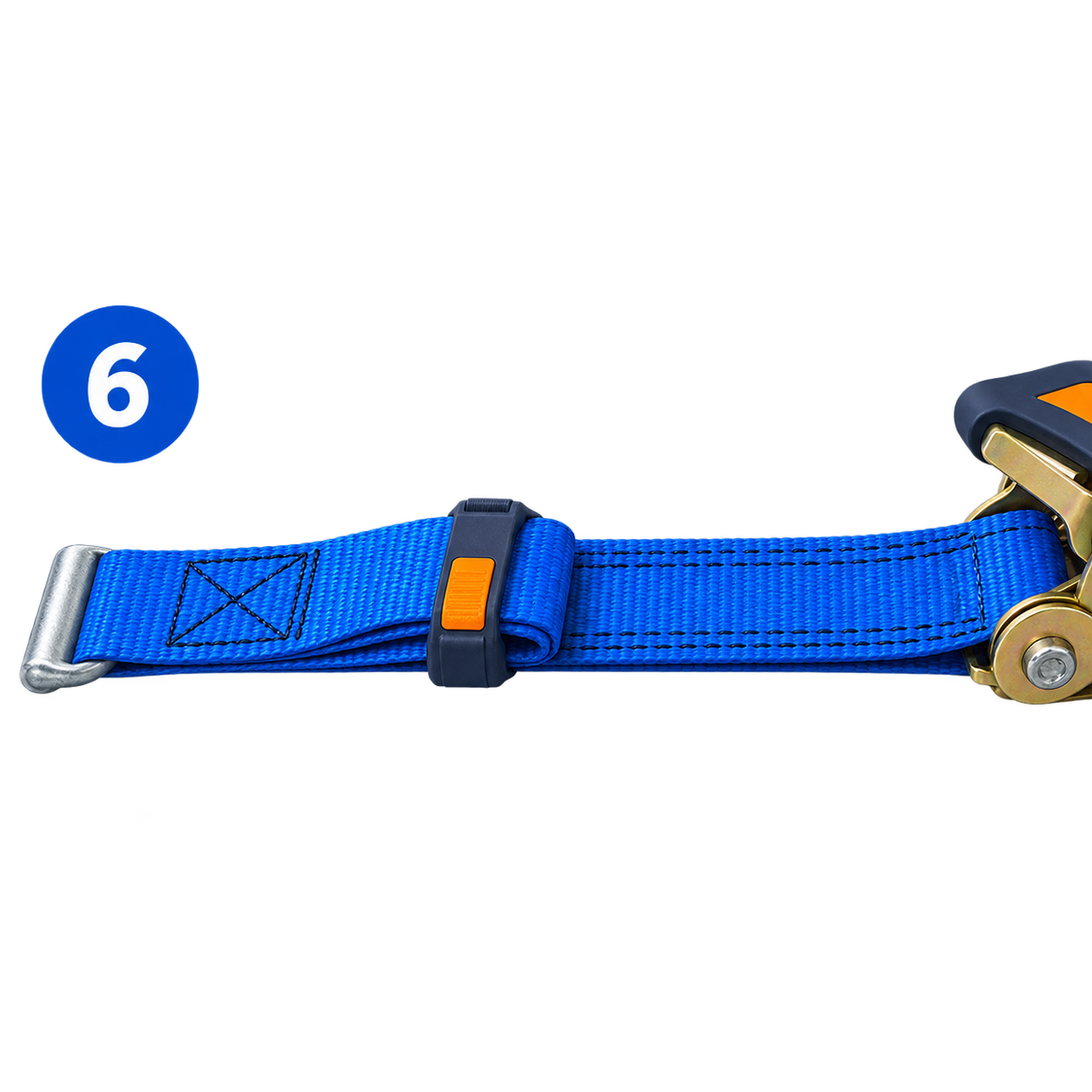
6. Secure the loose tail and perform the final check
Secure any remaining loose webbing so it cannot flap in the airflow, contact wheels, machinery or hot components, or create a trip or snagging hazard.
How to release a ratchet strap safely
A tensioned ratchet strap can release quickly, so keep hands, clothing and other body parts clear of the webbing and load before opening the mechanism.
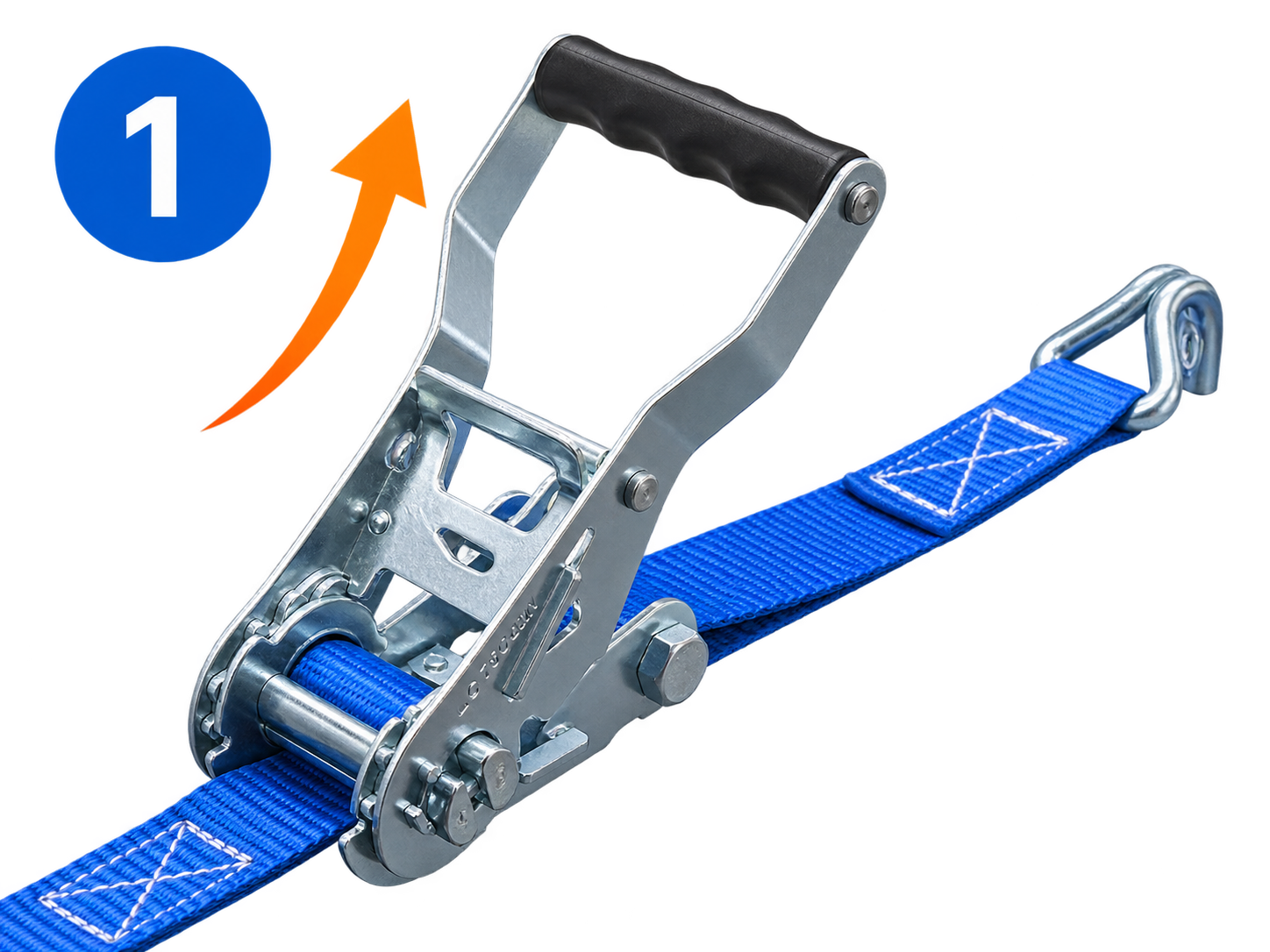
1. Open the ratchet handle
Hold the ratchet securely and pull the release catch while opening the handle fully. The mechanism must reach the fully open release position before the spindle can rotate freely.
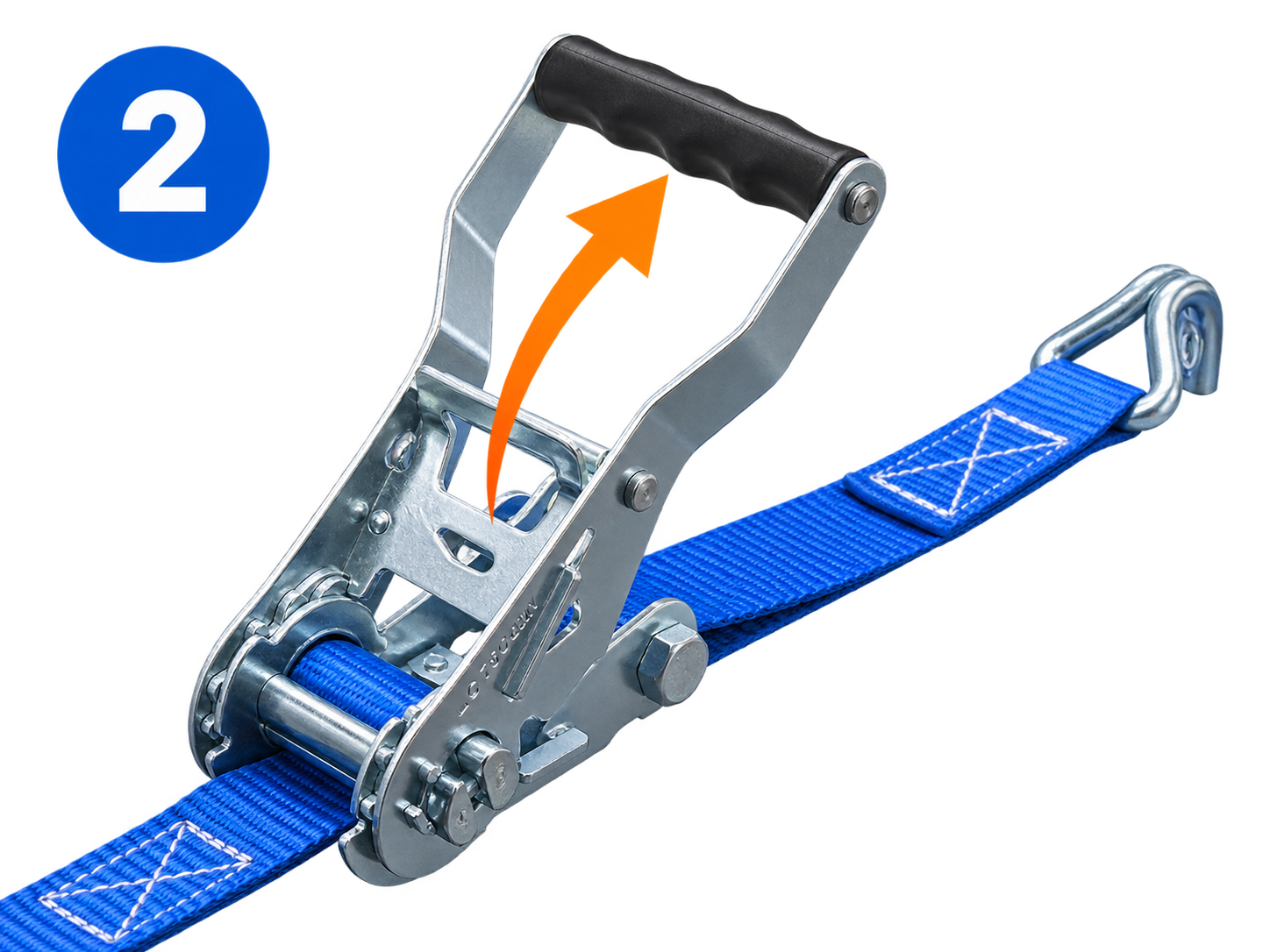
2. Allow the tension to release
Keep control of the ratchet and webbing as the tension comes off. Do not place fingers close to the spindle, gear teeth or moving parts.
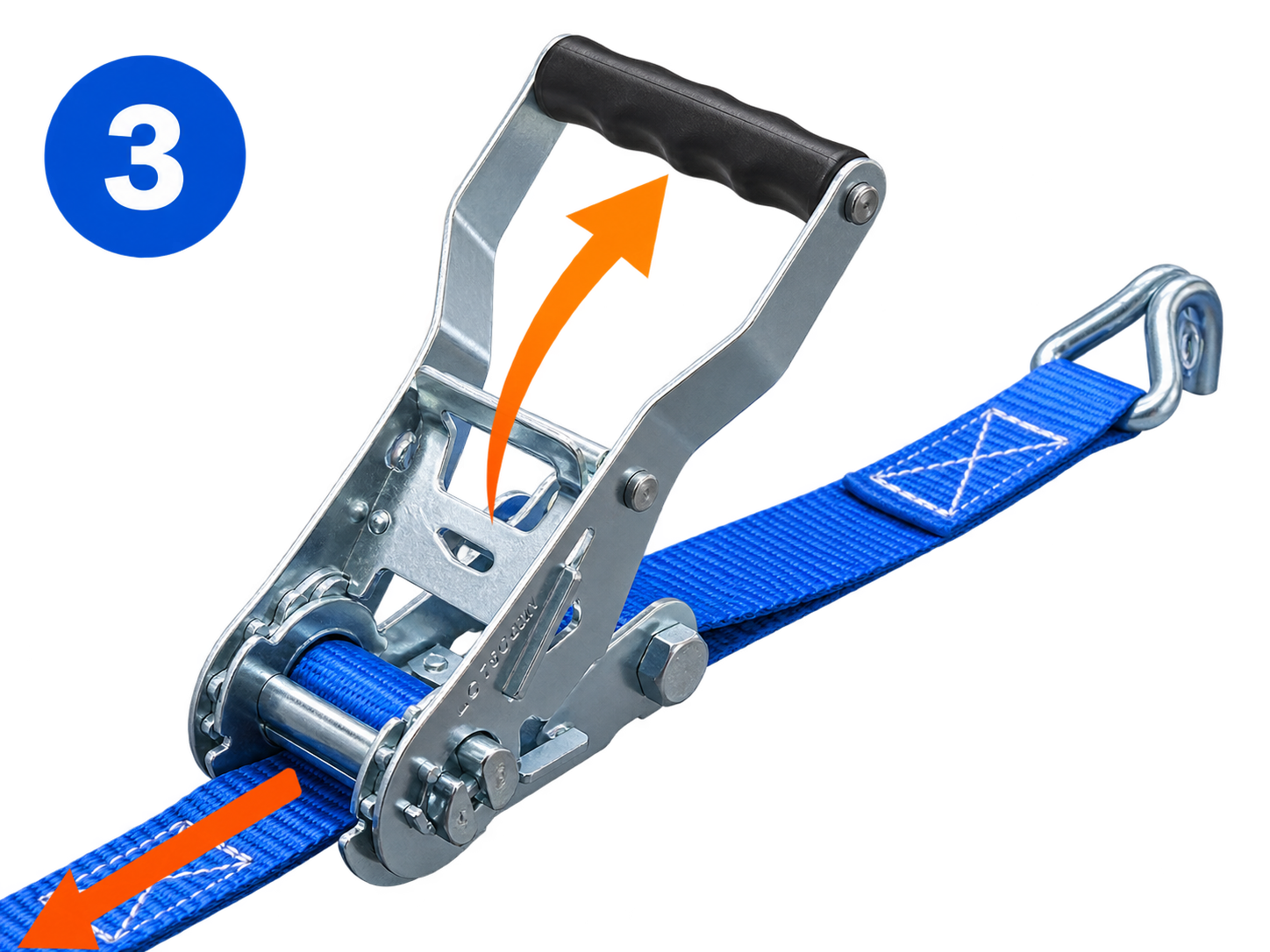
3. Pull the webbing free
Once the strap is completely slack, pull the adjustable webbing back through the spindle and disconnect the end fittings from the anchor points.
Warning
A heavily tensioned strap can move suddenly when released. Stand clear of the load path, make sure the load is stable before releasing the restraint and never place your face or body directly over the ratchet mechanism.
Two ways a ratchet strap restrains a load
Ratchet straps are generally used in one of two ways: as a tie-down over the load, or as a direct restraint connected between the load and suitable anchor points. The two methods work differently and rely on different parts of the strap's rating.
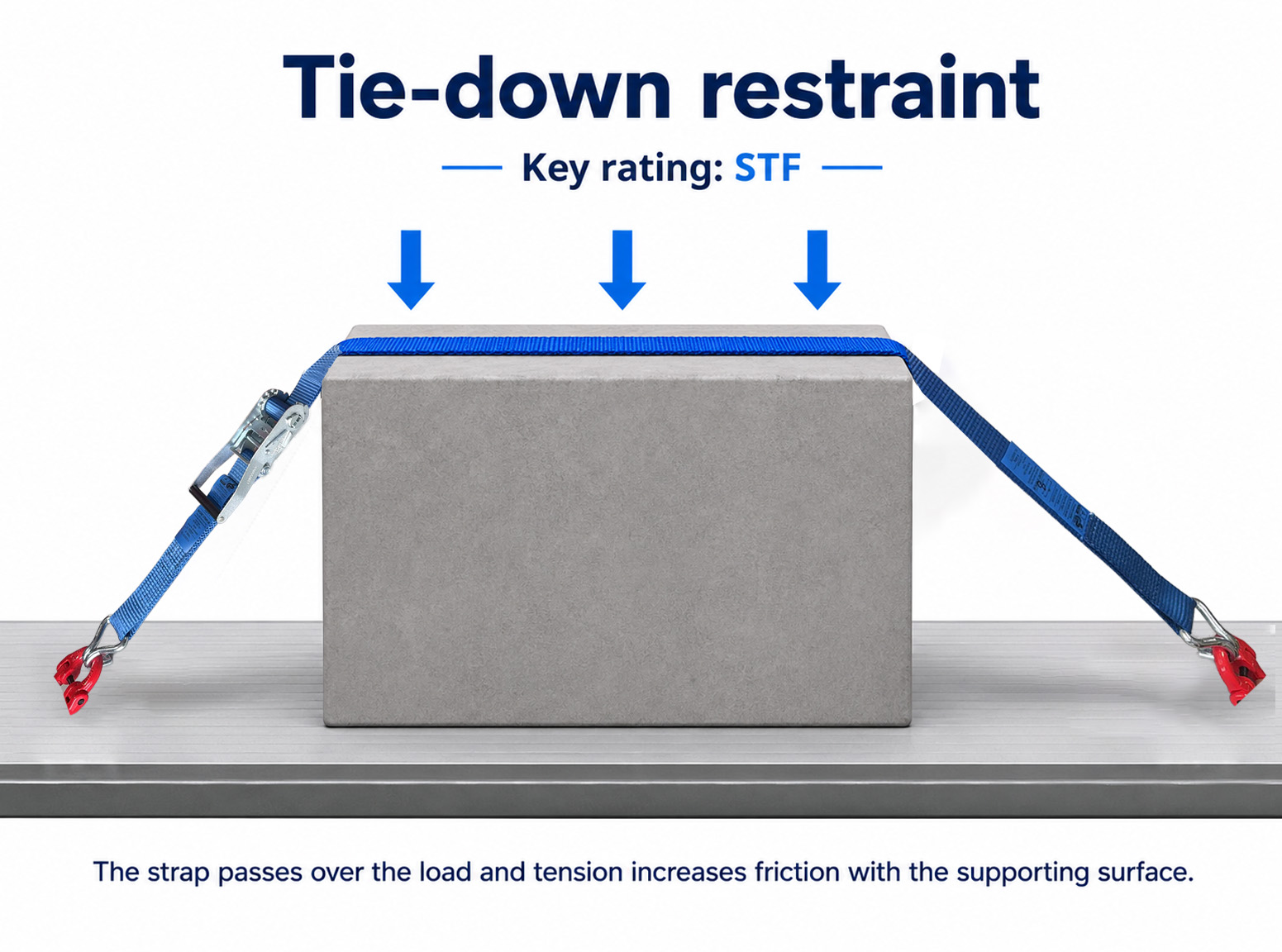
In a tie-down arrangement, the strap passes over the load and is tensioned between anchor points on the vehicle or structure. The strap pulls the load downwards, increasing the friction between the load and the supporting surface.
Key rating: STF — Standard Tension Force
STF indicates the pre-tension that the ratchet can typically introduce into the strap under the specified test conditions. It is particularly important when calculating friction-based tie-down restraint.
Best suited to: loads where downward clamping force and friction form part of the restraint system.
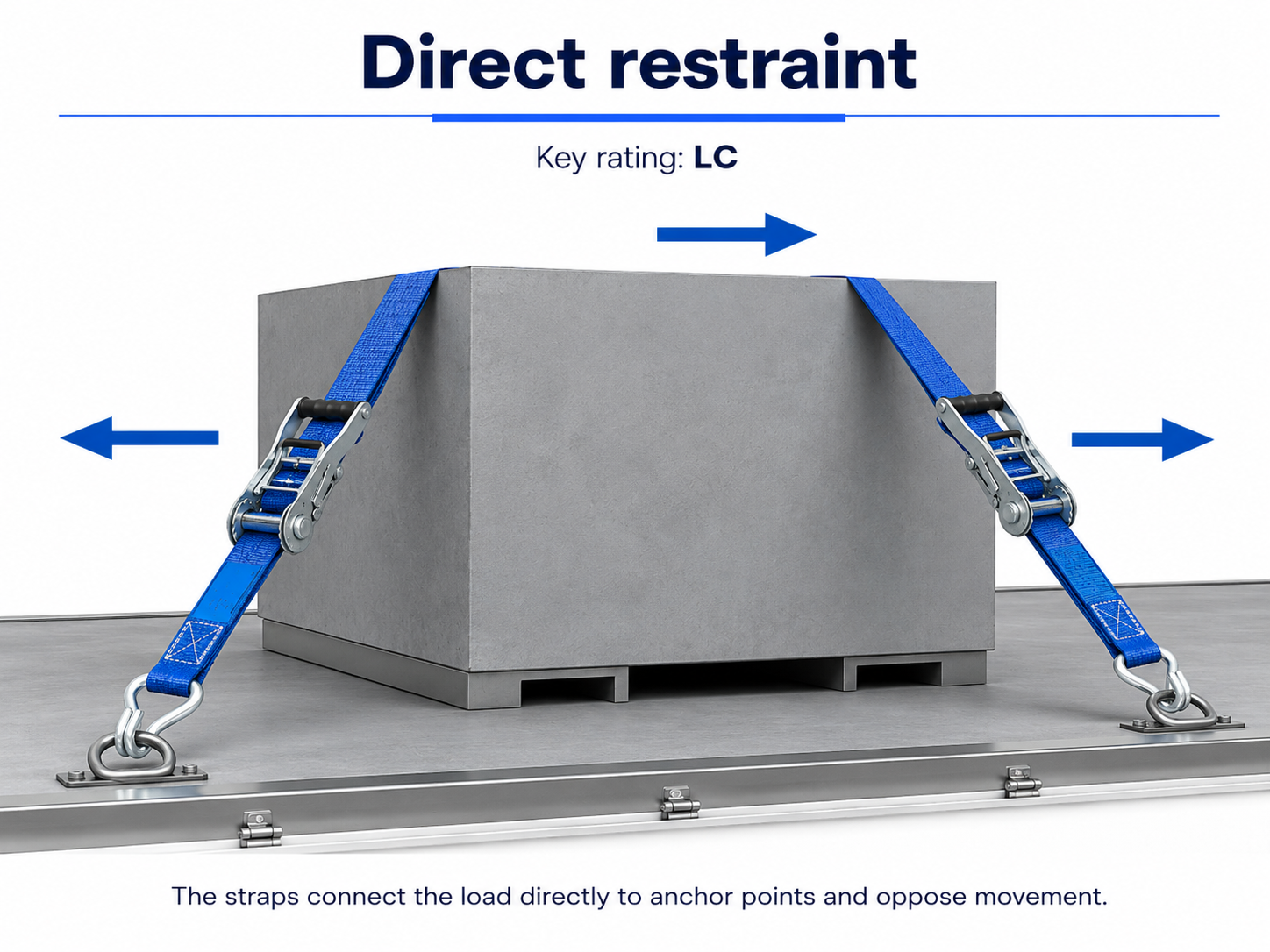
In a direct restraint arrangement, the straps connect the load directly to suitable anchor points and are aligned so that their tension resists movement in the required direction.
Key rating: LC — Lashing Capacity
LC is the key rated value used when assessing the capacity of the strap in direct restraint. The actual restraint achieved also depends on the number of straps, their angles, the anchor points and the direction of movement being controlled.
Best suited to: loads where the straps directly oppose forward, rearward or sideways movement.
The same ratchet strap may be suitable for both methods, but the restraint calculation is different. Do not assume that a strap's break-force figure alone tells you how much load it can safely restrain.
Where ratchet straps are used
Ratchet straps are used across many industries, but the restraint method, strap rating, end fittings and environmental conditions vary considerably. These examples show some of the most common applications.

Transport & Haulage
Ratchet straps are widely used to secure palletised goods, machinery, building materials and general freight on vans, trailers and commercial vehicles. Correct anchor points, strap angles and load distribution are essential.
Typical considerations:
LC, STF, anchor-point strength, edge protection and load movement during braking or cornering.
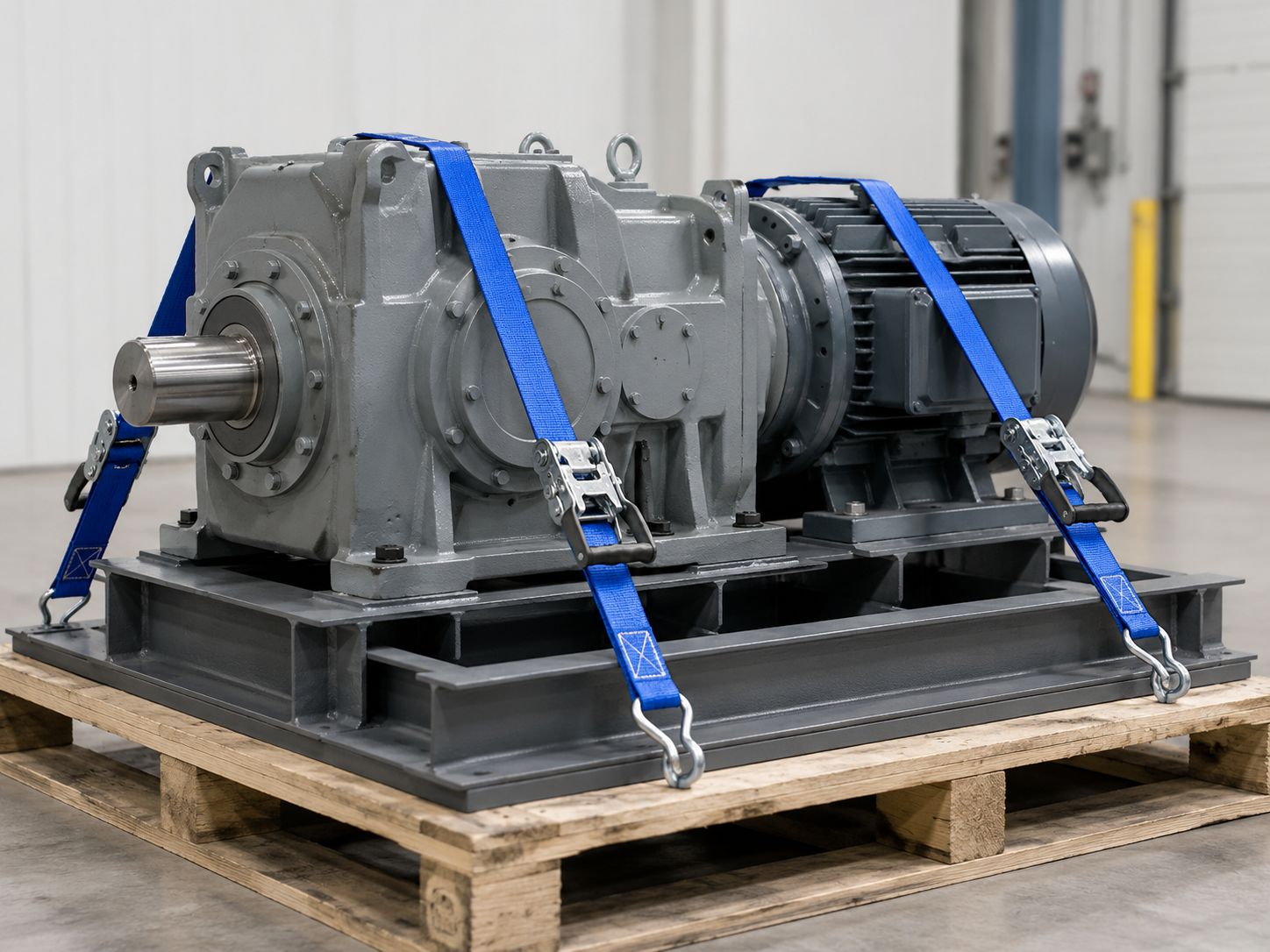
Industrial
In factories, warehouses and engineering environments, ratchet straps are useful for securing equipment, machinery, fabricated components and packaged loads during handling, storage or internal transport.
Typical considerations:
Sharp edges, oily or contaminated surfaces, irregular load shapes and repeated use.
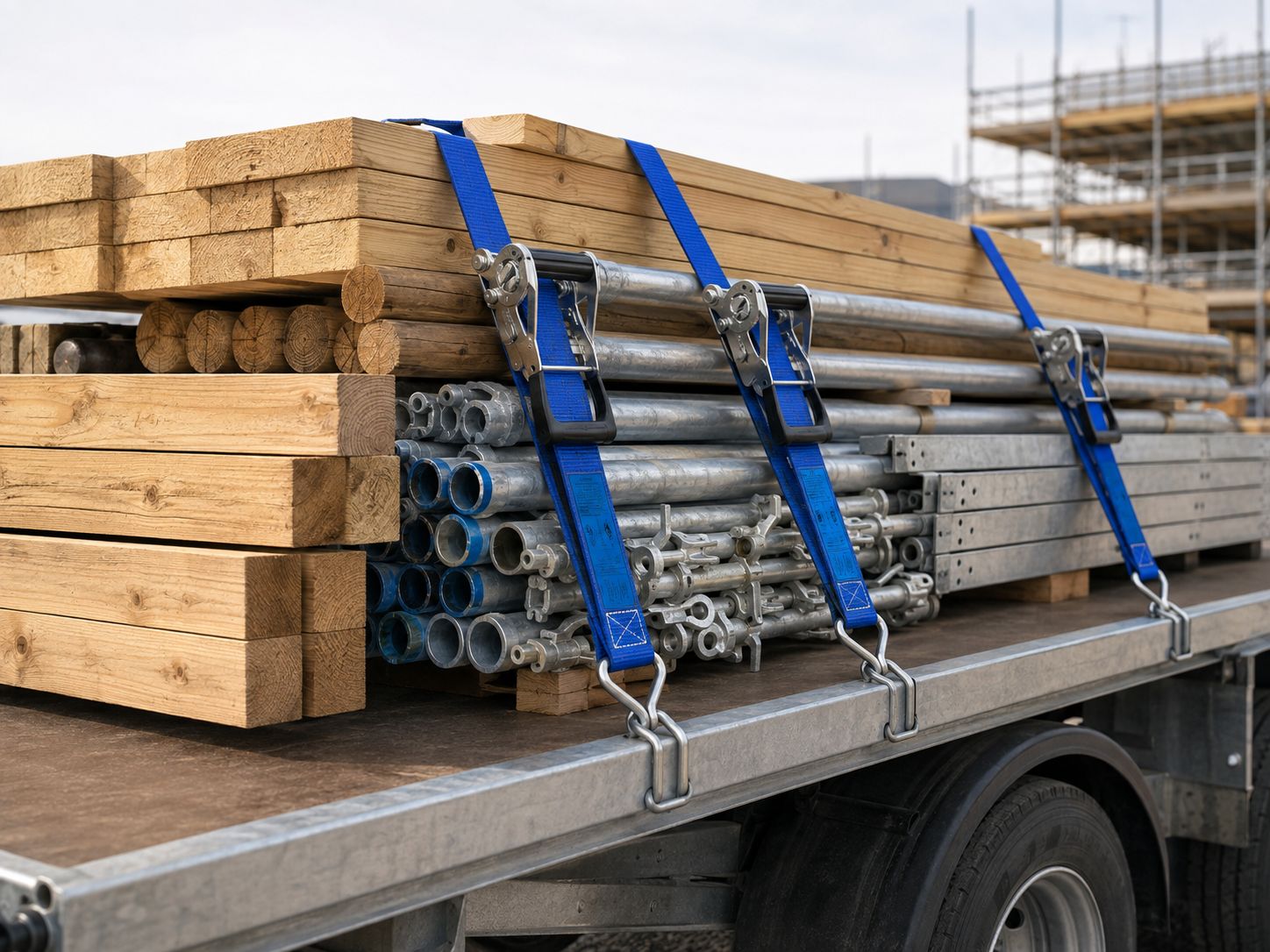
Construction
Construction applications include securing tools, plant attachments, timber, scaffold components, pipes and other materials during transport to and from site.
Typical considerations:
Abrasion, dirty environments, exposed edges, heavy loads and frequent inspection.

Events & Entertainment
Ratchet straps are commonly used to secure staging equipment, flight cases, exhibition systems, lighting equipment and other production assets during transport and setup.
Typical considerations:
Appearance, repeated handling, sensitive equipment and discreet black webbing where required.
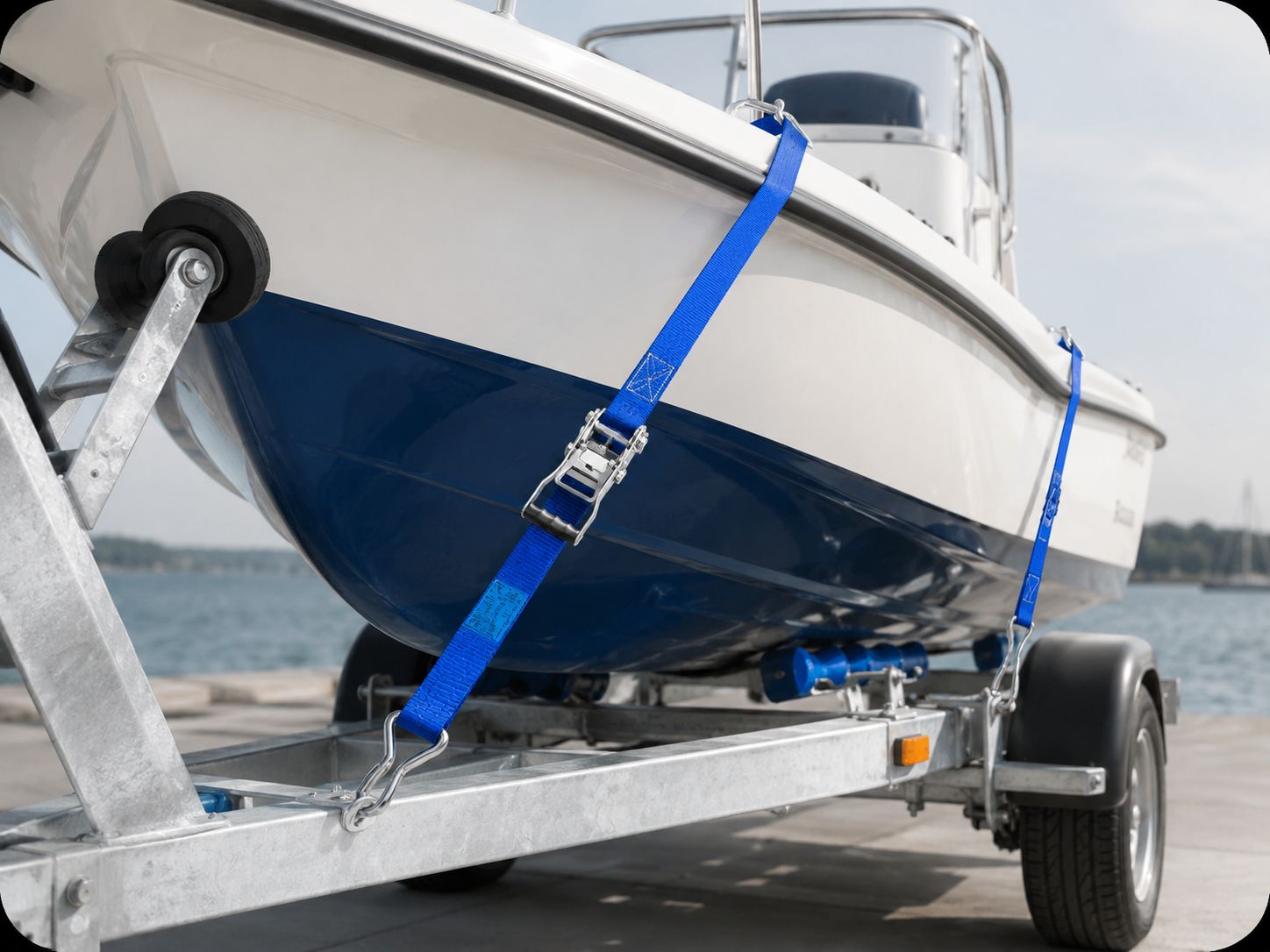
Marine
Marine and waterside environments often require better resistance to corrosion. Stainless-steel ratchet assemblies can be useful for securing equipment, boats, marine components and deck cargo where moisture and salt exposure are concerns.
Typical considerations:
Corrosion resistance, wet webbing, salt contamination and regular inspection.
The environment does not change the fundamental operating principle of a ratchet strap, but it can significantly affect the correct choice of webbing, hardware, end fittings, protection and inspection frequency.
Common ratchet strap mistakes to avoid
Your content goes here. Edit or remove this text inline or in the module Content settings. You can also style every aspect of this content in the module Design settings and even apply custom CSS to this text in the module Advanced settings.
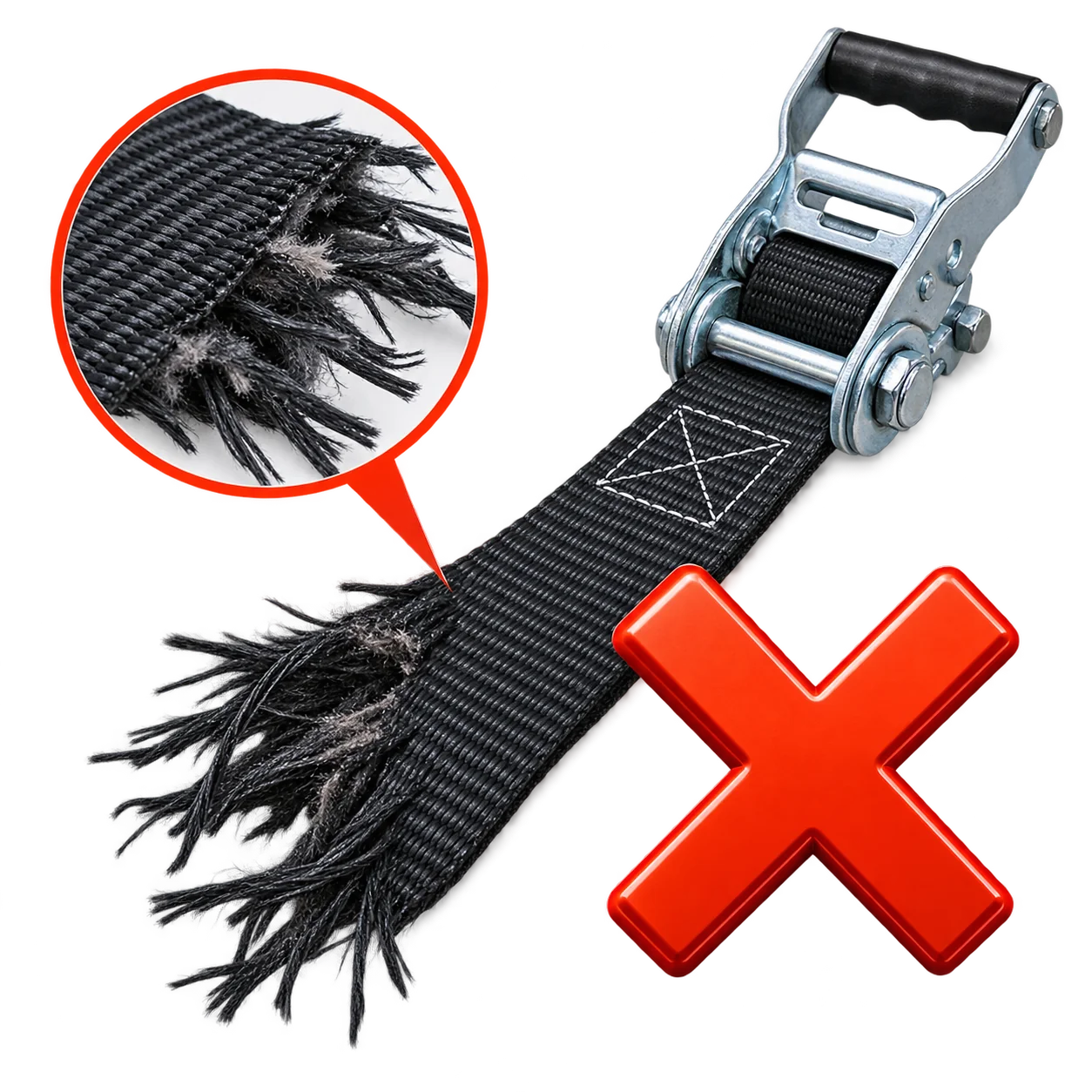
Using damaged webbing
Cuts, heavy abrasion, broken stitching, chemical damage or badly worn edges can reduce the performance of the strap. Damaged straps should be taken out of service.
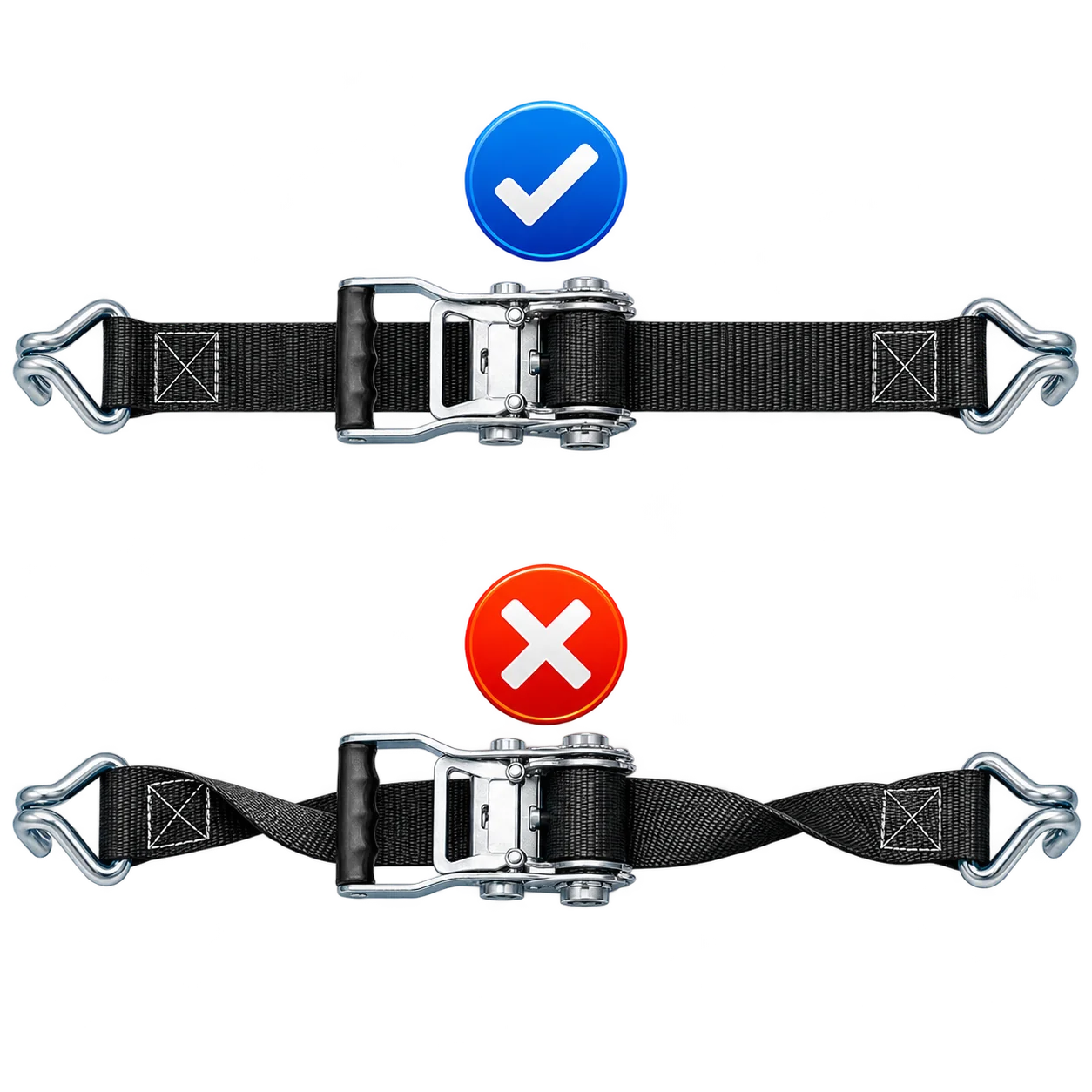
Twisting the webbing
The webbing should lie flat throughout the restraint route. Twists can cause uneven loading, additional wear and poor seating around the load.
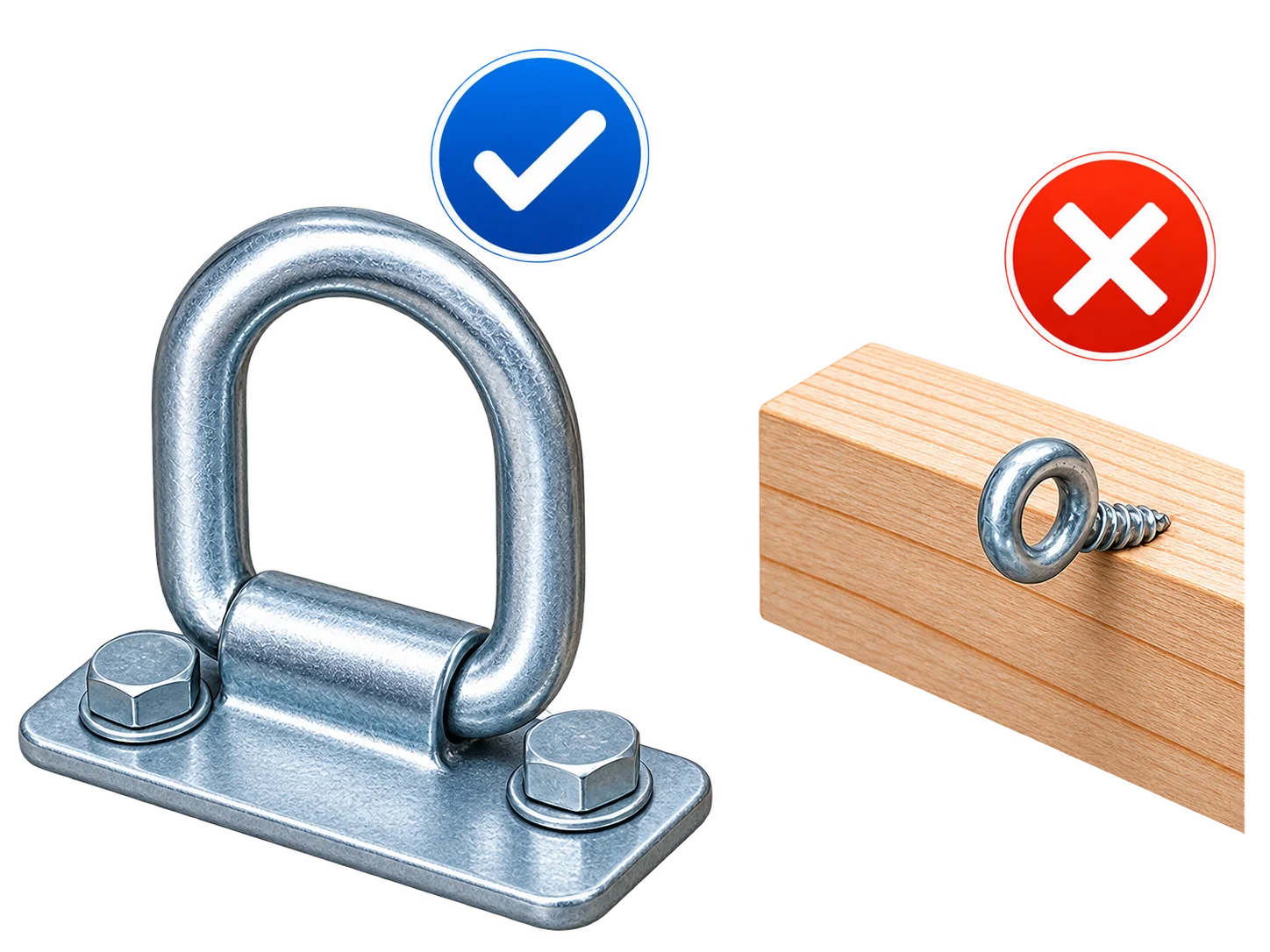
Hooking onto unsuitable points
Do not hook onto weak sheet metal, trim, bodywork or any point that is not suitable for restraint. The hook and anchor point must be compatible and properly engaged.
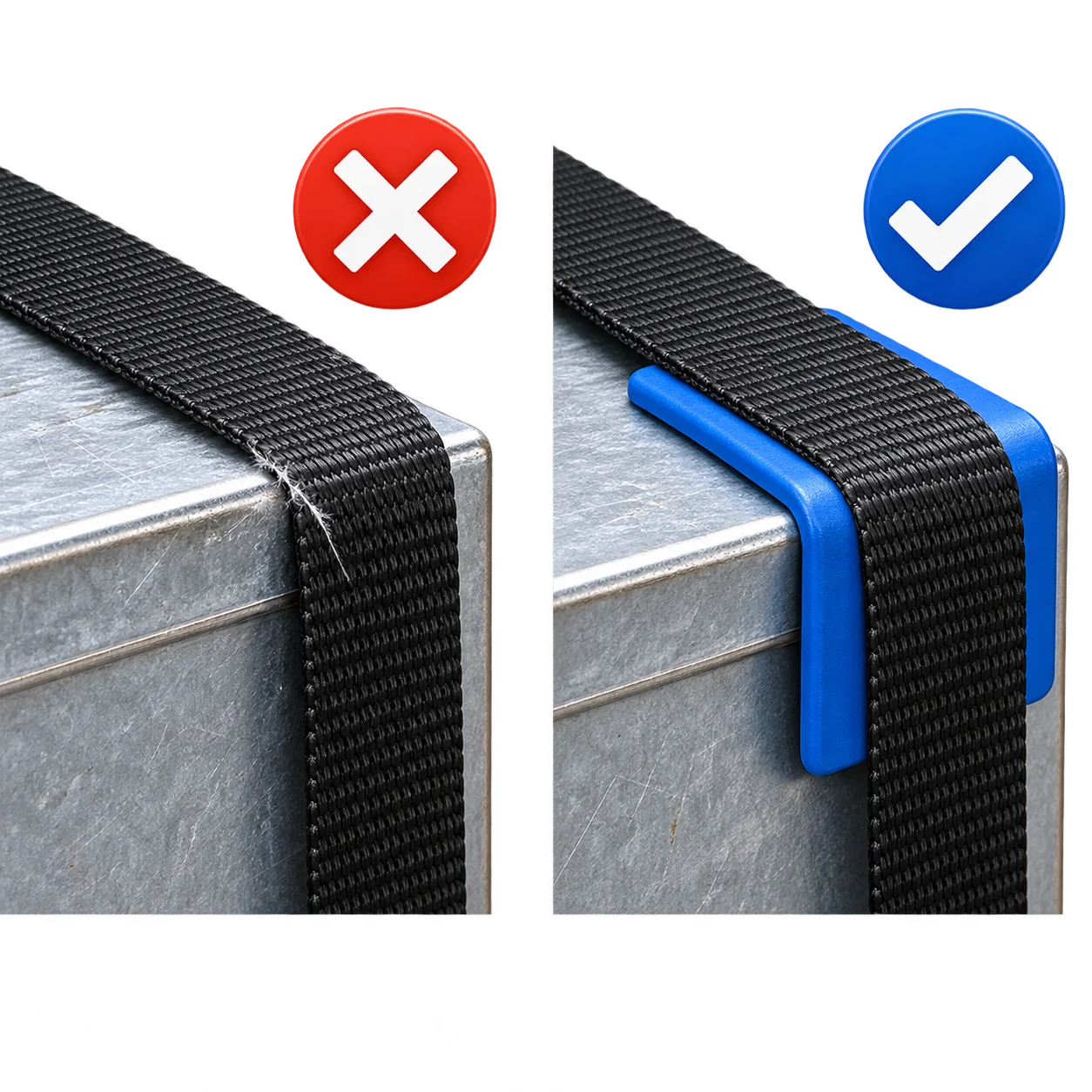
Leaving sharp edges unprotected
Webbing running across a sharp or abrasive edge can be damaged very quickly. Use suitable corner or edge protection where required.
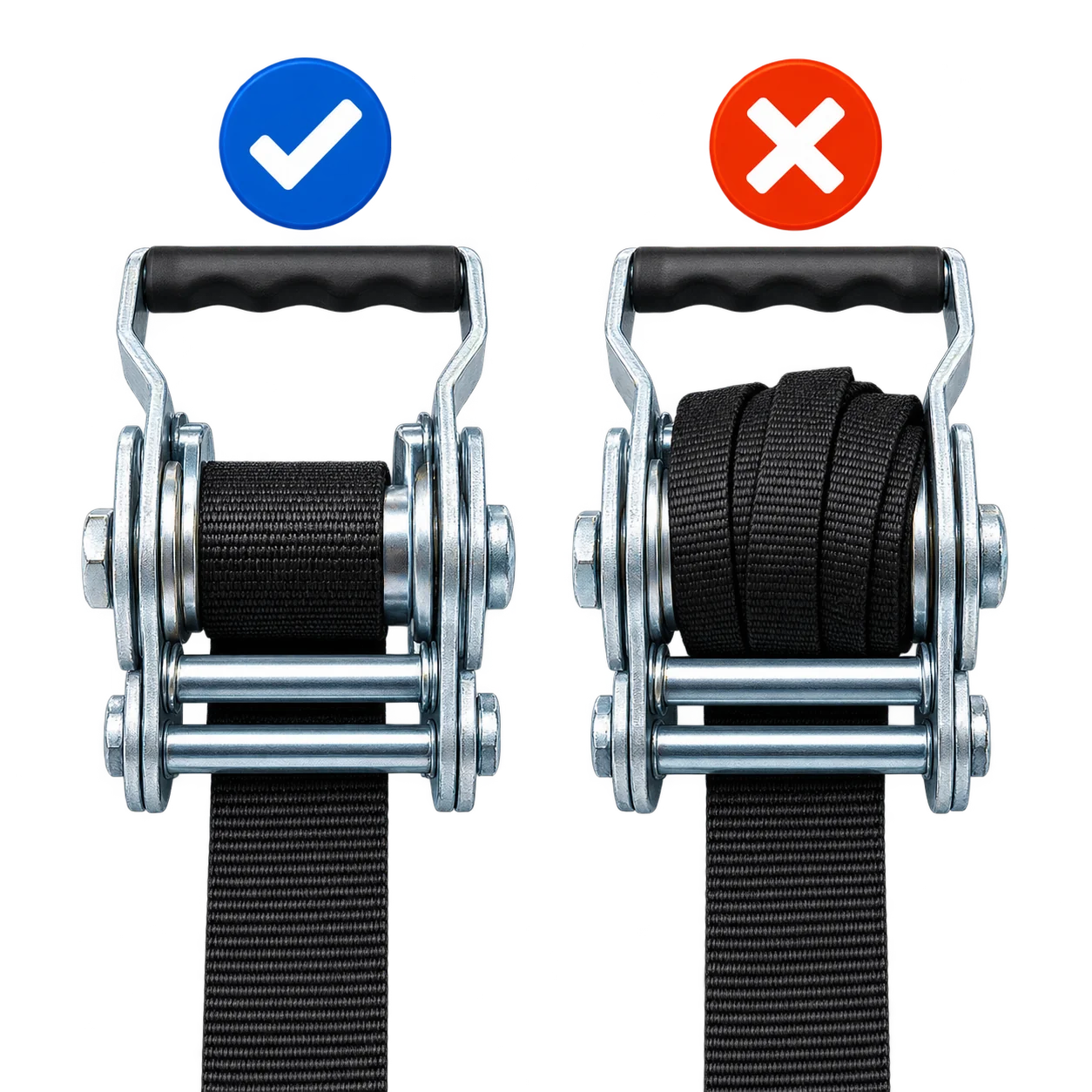
Overfilling the spindle
Pull most of the slack through by hand before operating the ratchet. Excessive webbing wound around the spindle can interfere with the mechanism and reduce effective tensioning.
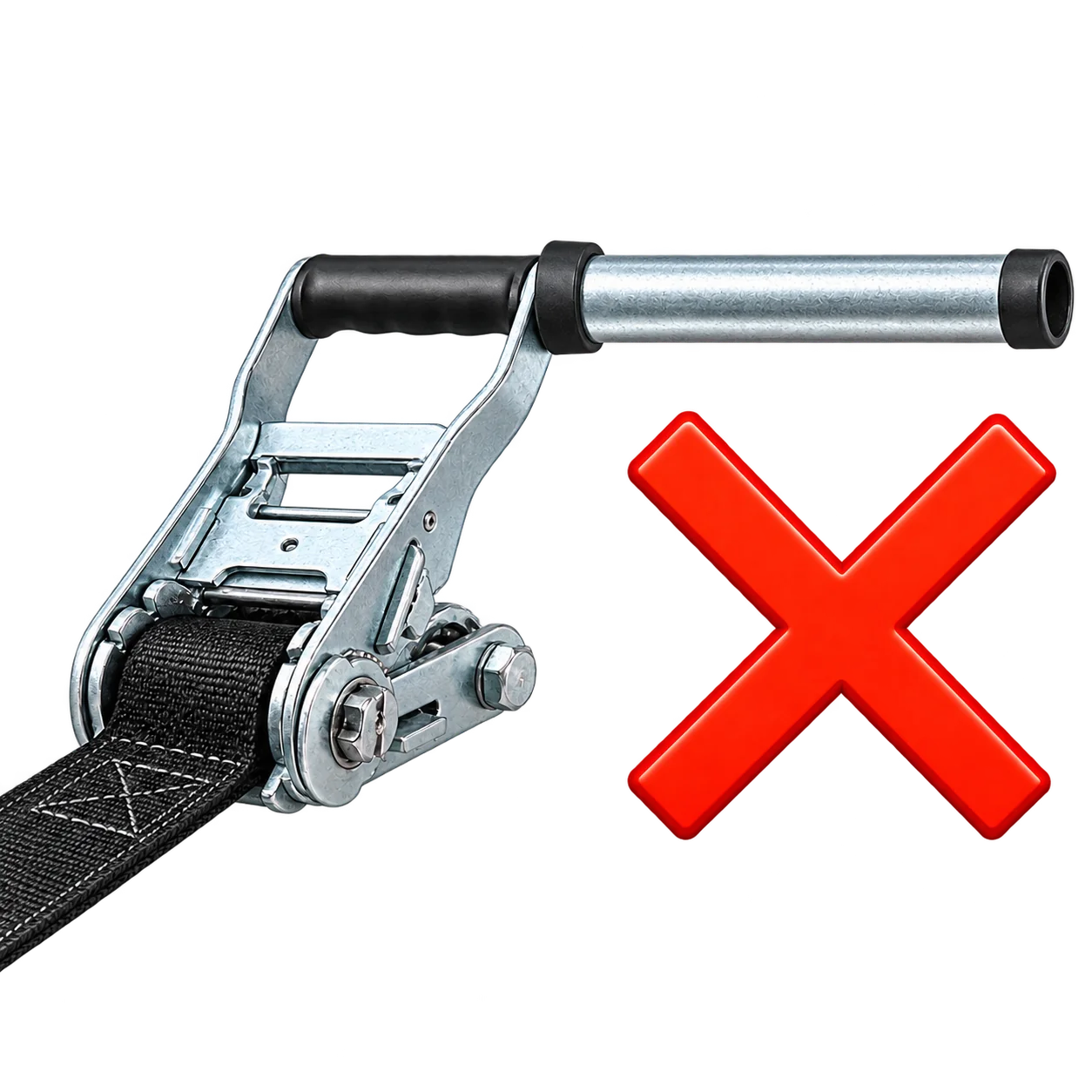
Using a bar or handle extension
Do not fit a pipe, bar or improvised extension over the ratchet handle. This can overload the strap, ratchet or anchor points and may damage the equipment.Using a bar or handle extension

If the strap, ratchet, stitching, label, end fittings or anchor points do not look right, stop and inspect the system before applying tension.
Caring for and storing ratchet straps
Ratchet straps are reusable restraint equipment, but their condition should be checked after every job. Correct cleaning, drying and storage help protect the webbing, ratchet mechanism, end fittings and identification label.
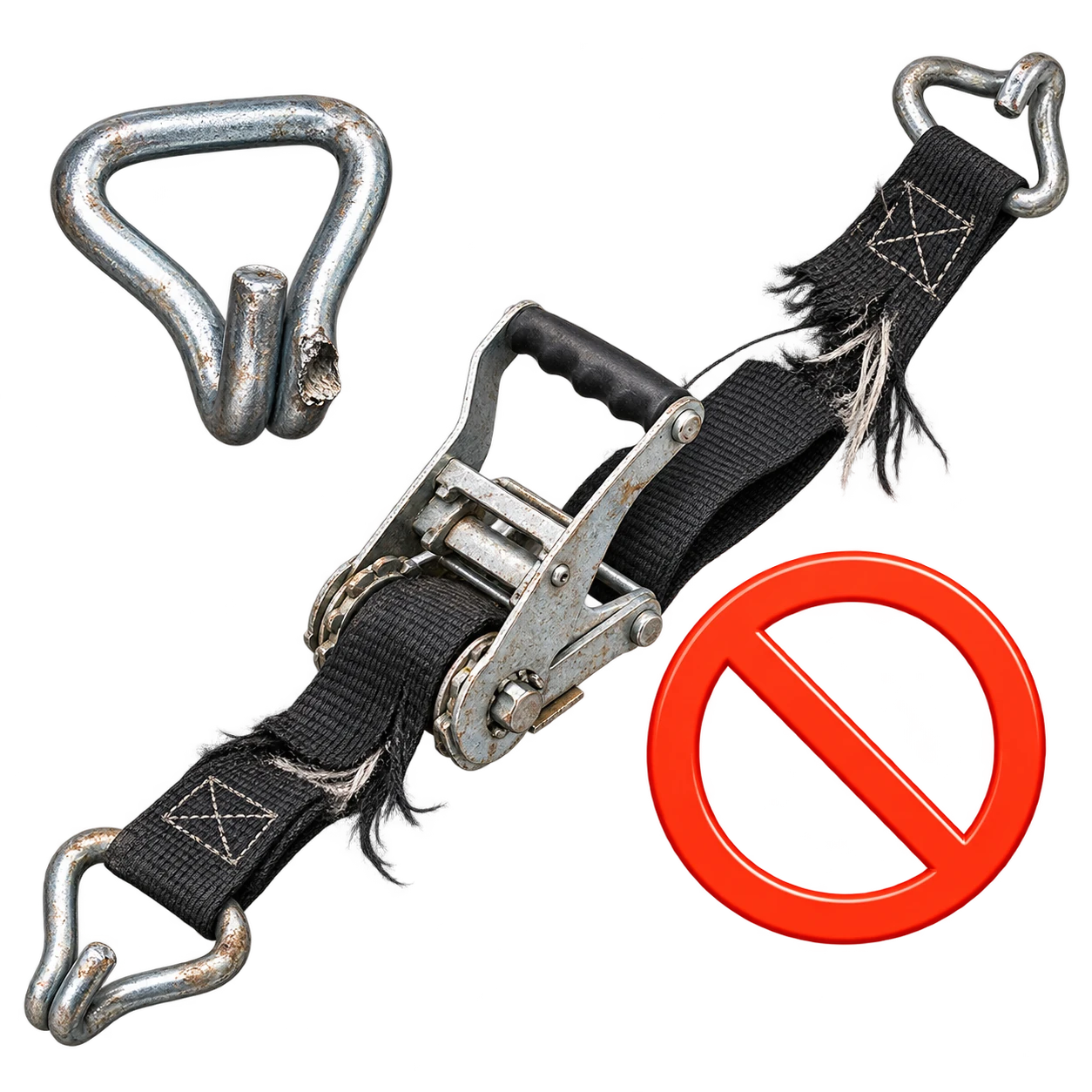
Inspect after use
Check the webbing, stitching, ratchet mechanism, label and end fittings after use. Look for cuts, abrasion, broken fibres, damaged stitching, distortion, corrosion or anything else that could affect safe operation.
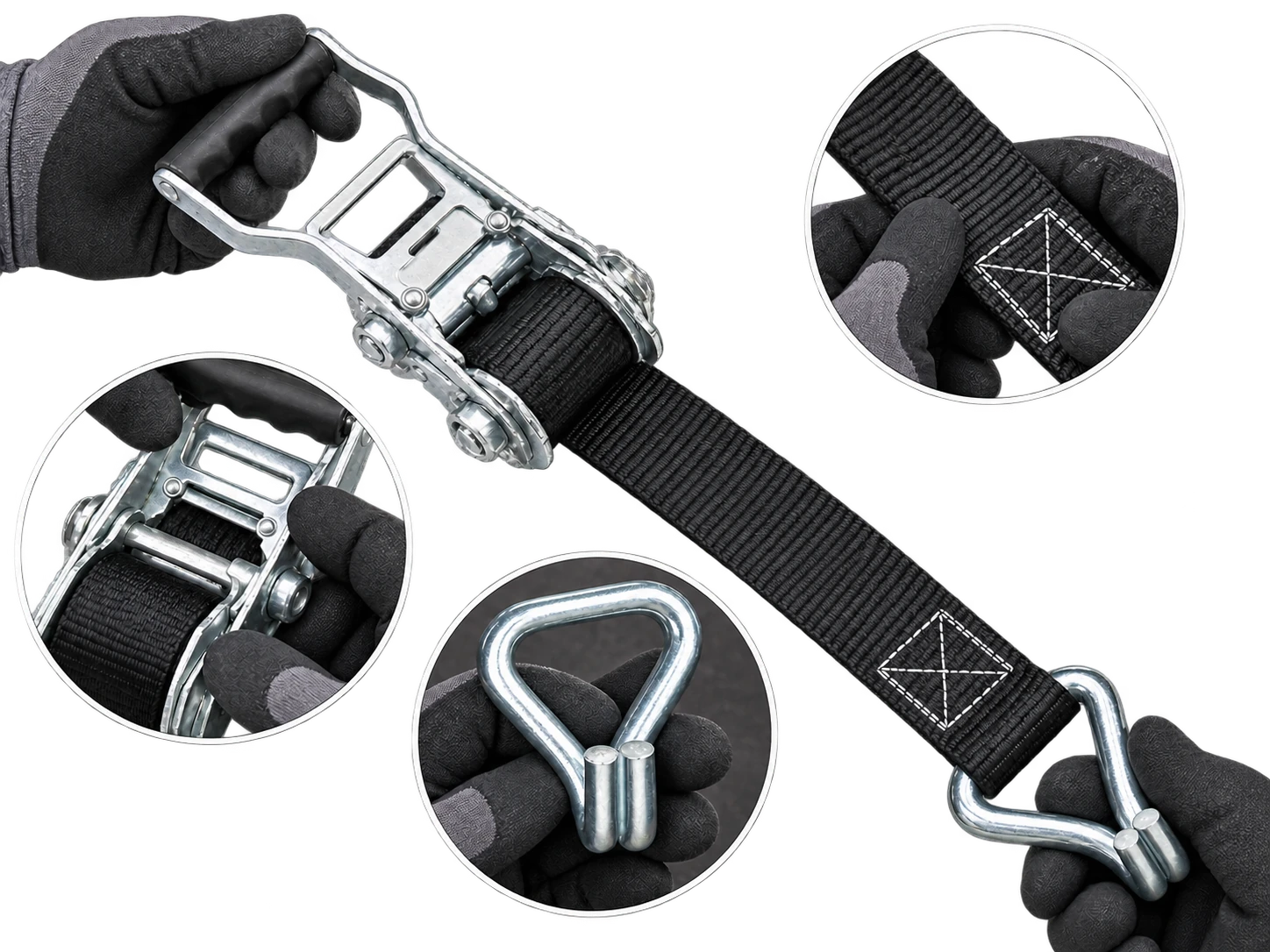
Clean carefully
Remove loose dirt and contamination before storage. Avoid aggressive cleaning methods or chemicals that could damage the polyester webbing, stitching, protective coatings or identification label.
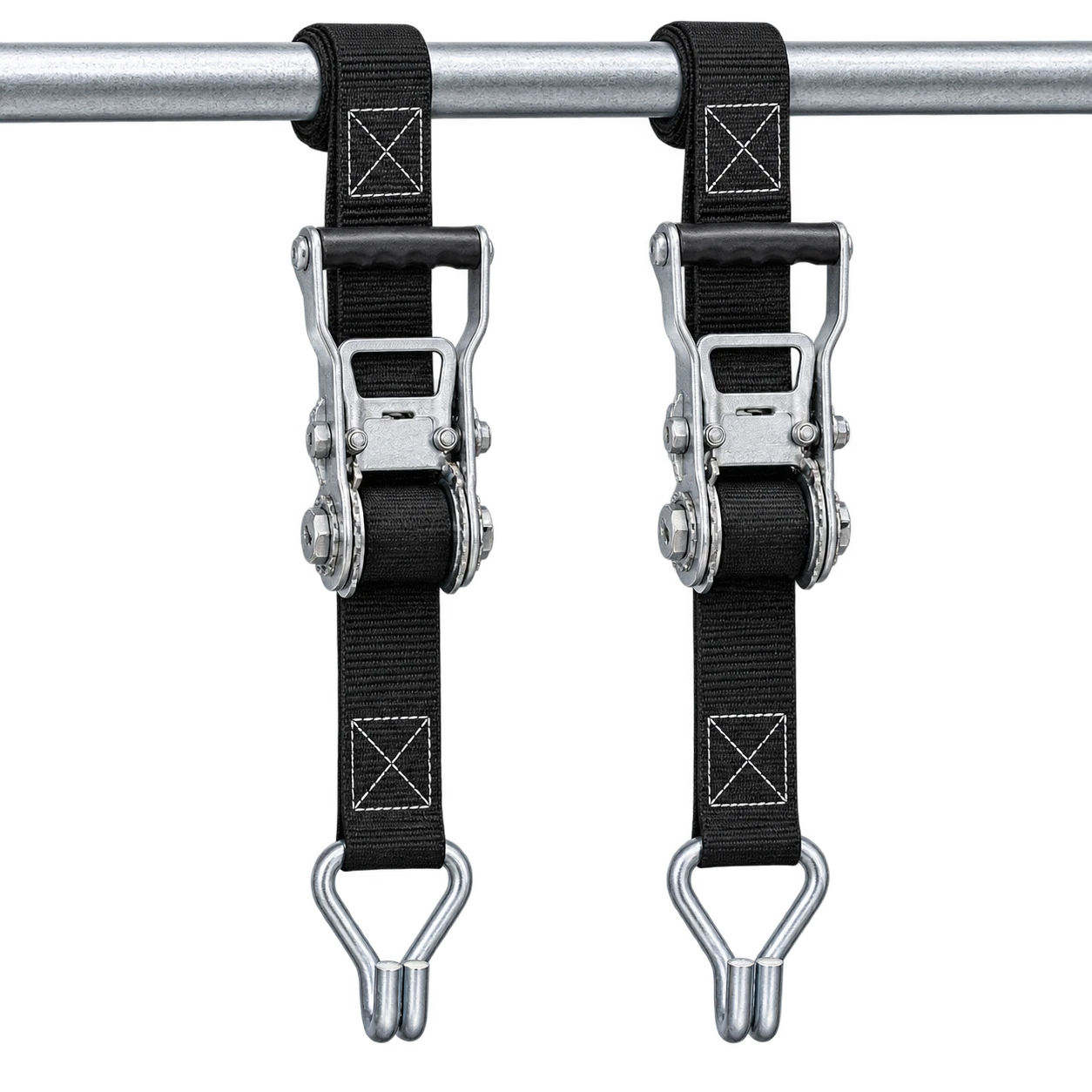
Dry before storage
If a strap becomes wet, allow it to dry naturally before putting it away. Do not leave wet webbing bundled tightly where moisture can remain trapped around the strap or ratchet mechanism.
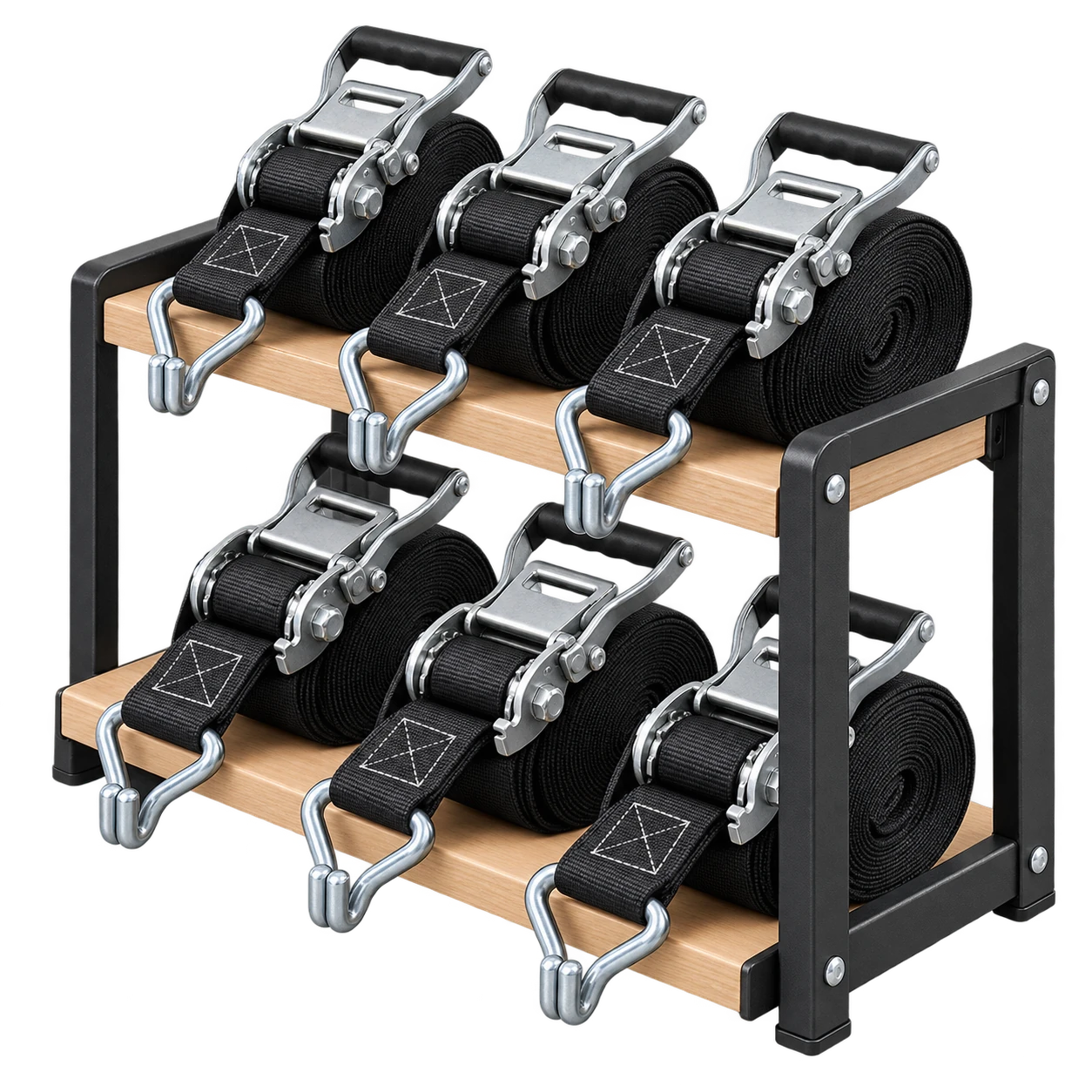
Store correctly
Keep ratchet straps in a clean, dry storage area away from unnecessary sunlight, excessive heat, chemicals, sharp objects and other sources of damage.
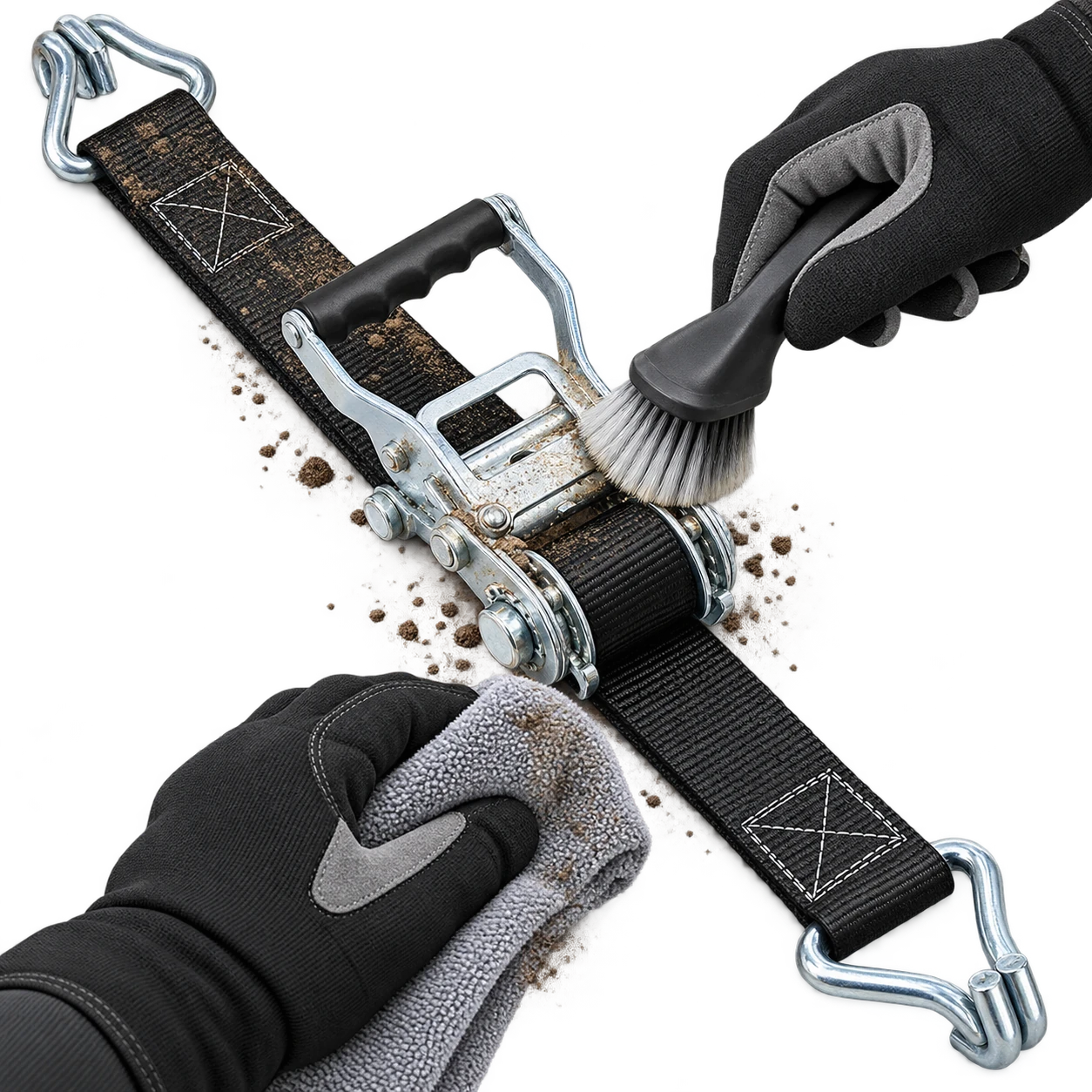
Keep the mechanism clean
Remove dirt and debris from the ratchet, spindle and release mechanism. Check that moving parts operate freely and that hooks and other end fittings are not bent, cracked or excessively corroded.
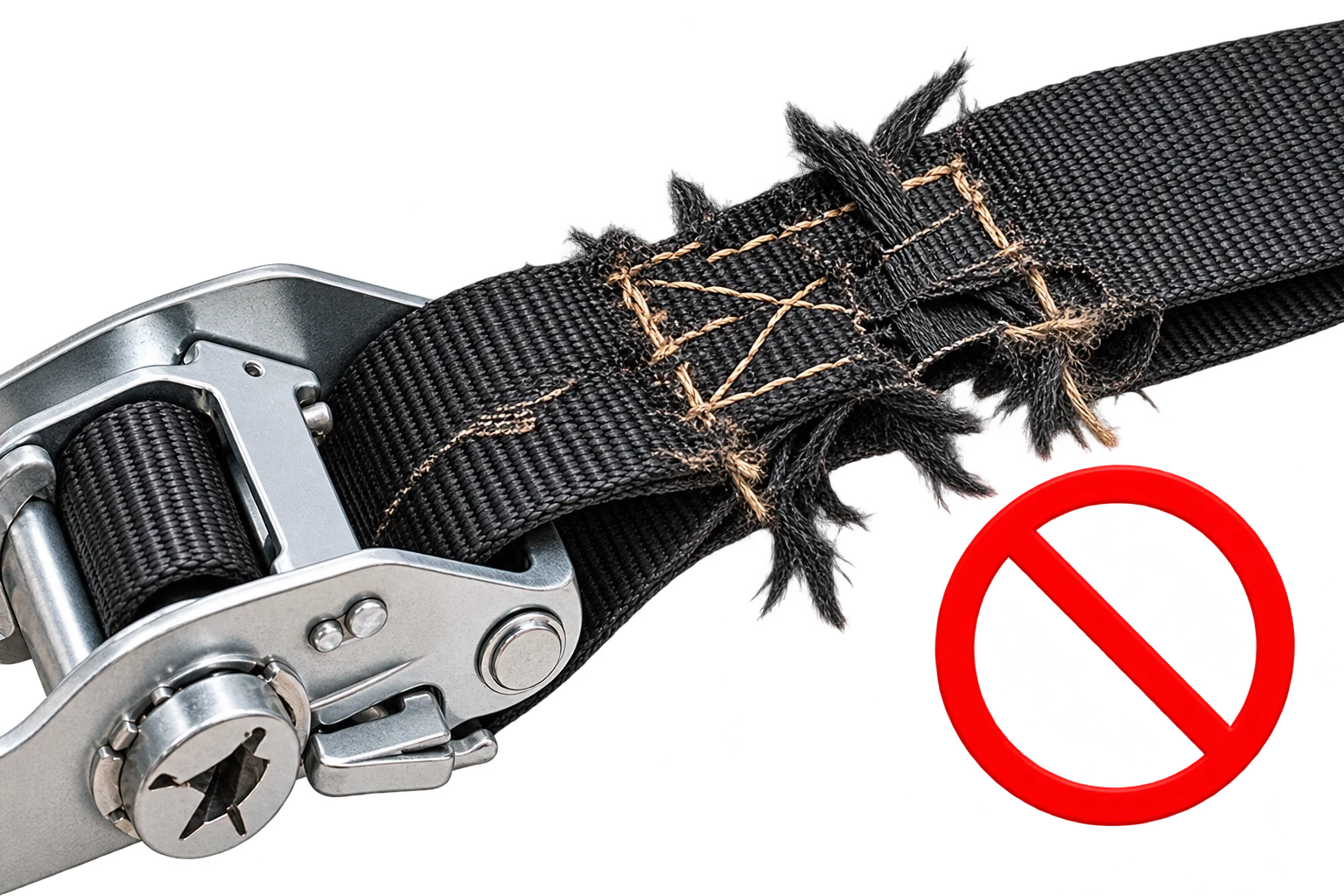
Remove damaged straps from service
Do not continue using a strap simply because the ratchet still works. Significant webbing damage, defective stitching, unreadable identification, distorted hardware or a malfunctioning ratchet are reasons to stop and assess the equipment.
A ratchet strap should never be returned to service simply because the mechanism still operates. The webbing, stitching, label and hardware must all remain suitable for continued use.
Ratchet strap terminology and ratings
The information printed on a ratchet strap label tells you far more than its overall strength. Understanding LC, STF, SHF and the relevant standard helps you choose and use the restraint correctly.
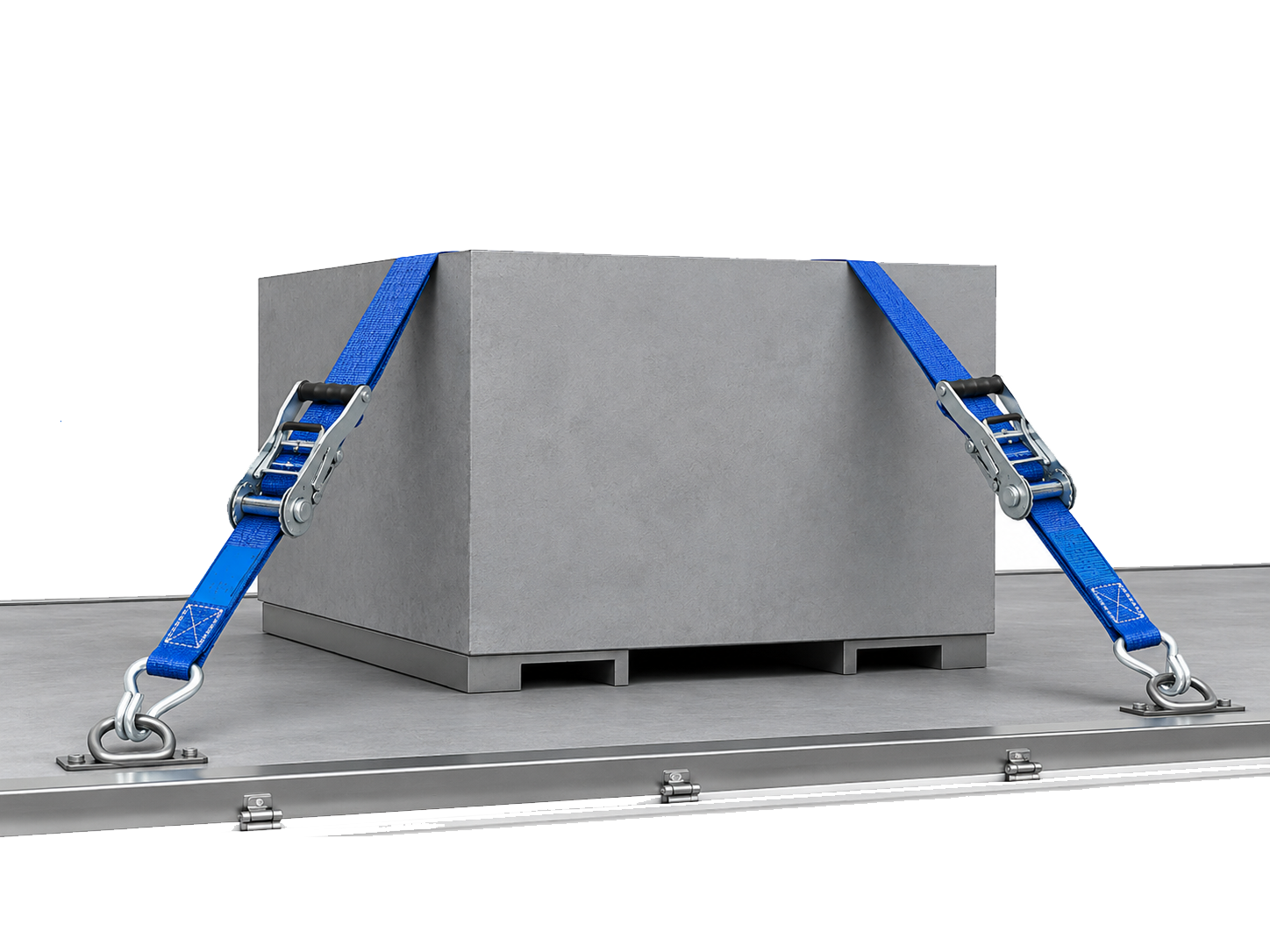
LC — Lashing Capacity
Lashing Capacity (LC) is the maximum force that the complete lashing is designed to sustain in use in a straight pull. It is expressed in daN and is one of the most important values when selecting a strap for direct restraint.
Use LC when assessing the capacity of a strap used for direct restraint.
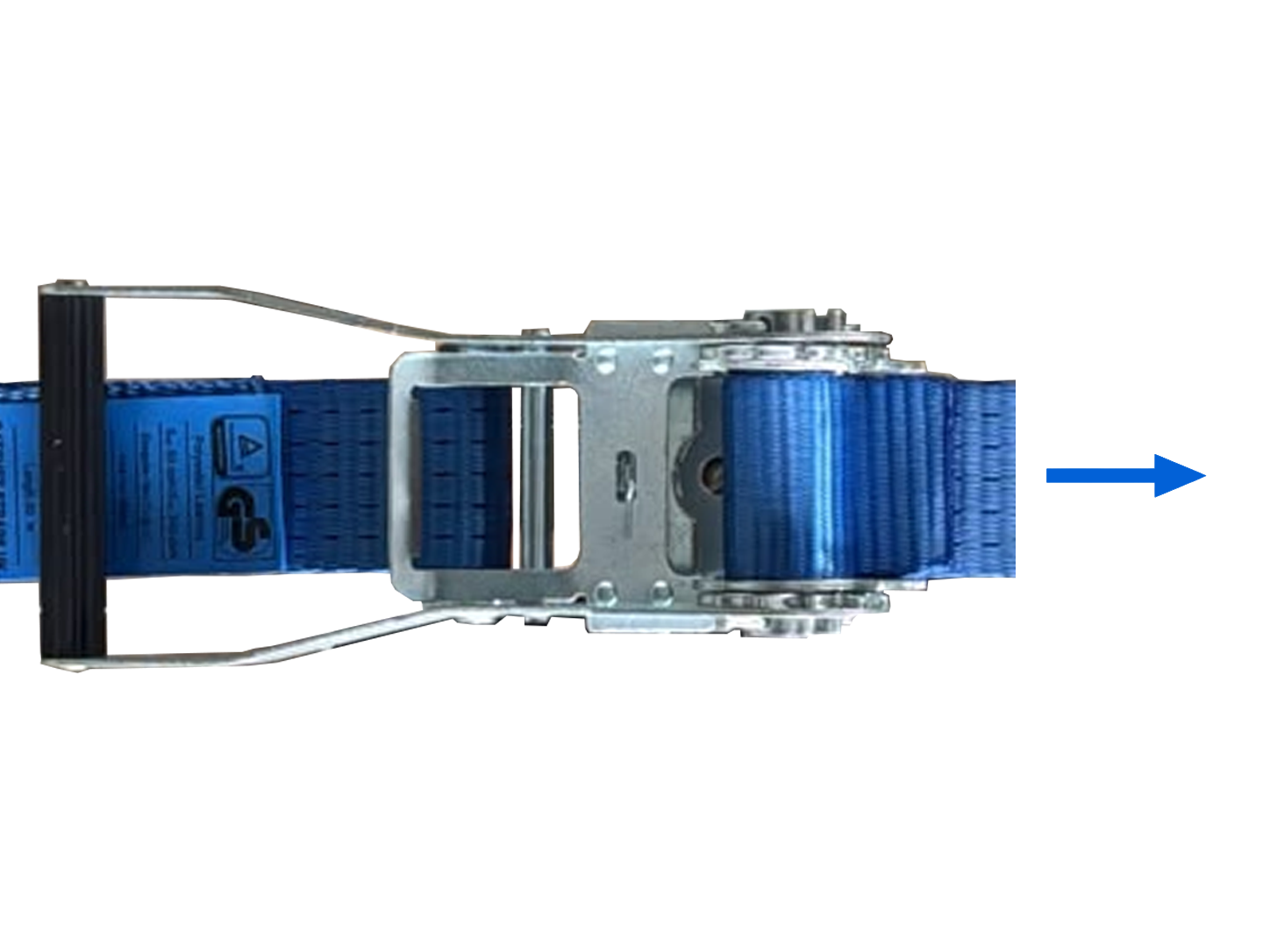
STF — Standard Tension Force
STF describes the residual tension produced in the webbing by the tensioning device after the standard hand force has been applied and the handle released. It is expressed in daN.
STF is particularly important in tie-down restraint, where pre-tension increases the clamping force on the load and therefore contributes to friction.
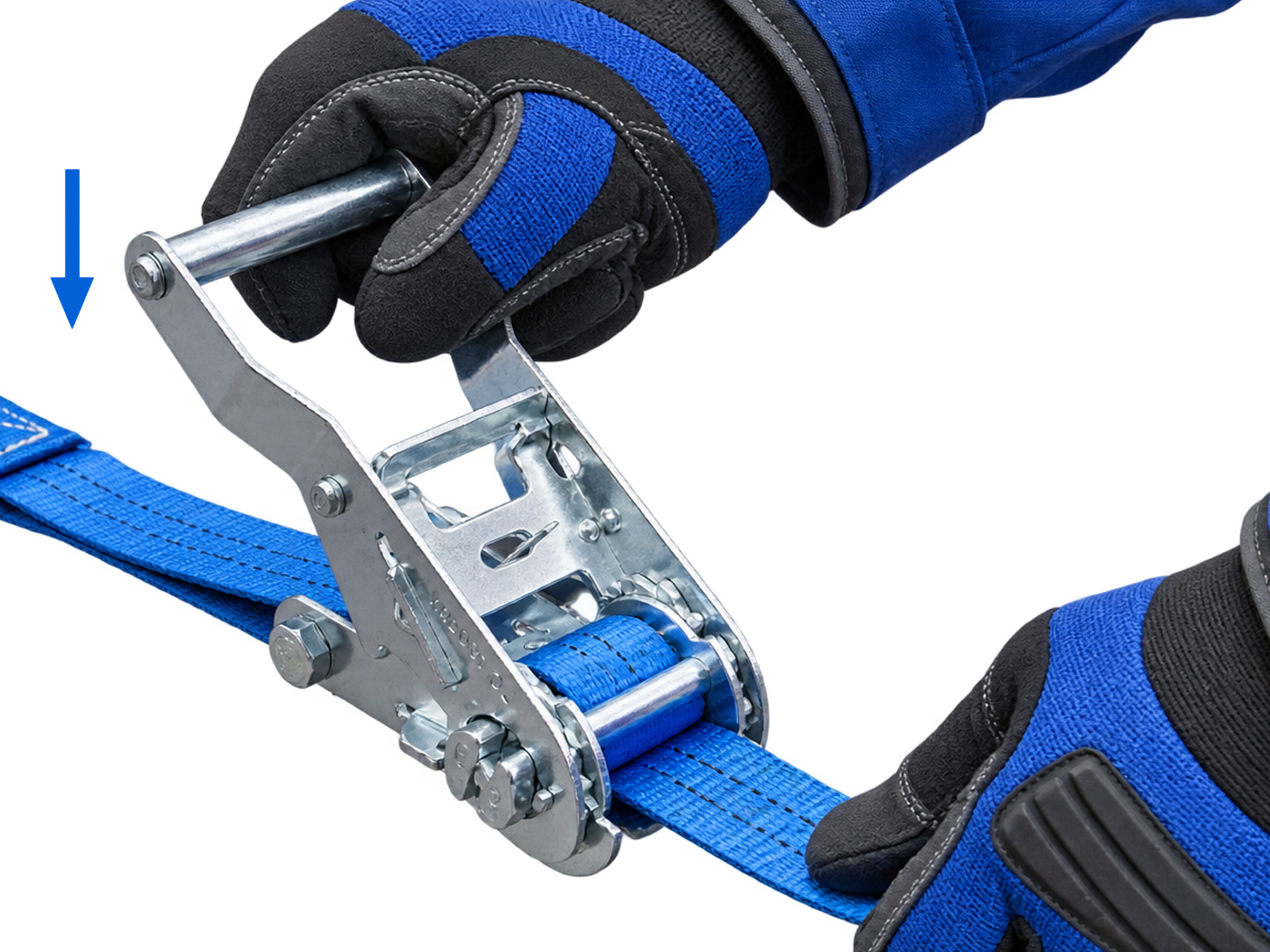
SHF — Standard Hand Force
SHF is the standard manual force used when operating the ratchet handle for the purpose of determining STF. For hand-operated web lashings covered by BS EN 12195-2, the standard hand force is 500 N — equivalent to 50 daN.
SHF is a test/reference value; it is not an instruction to use extra leverage on the ratchet handle.
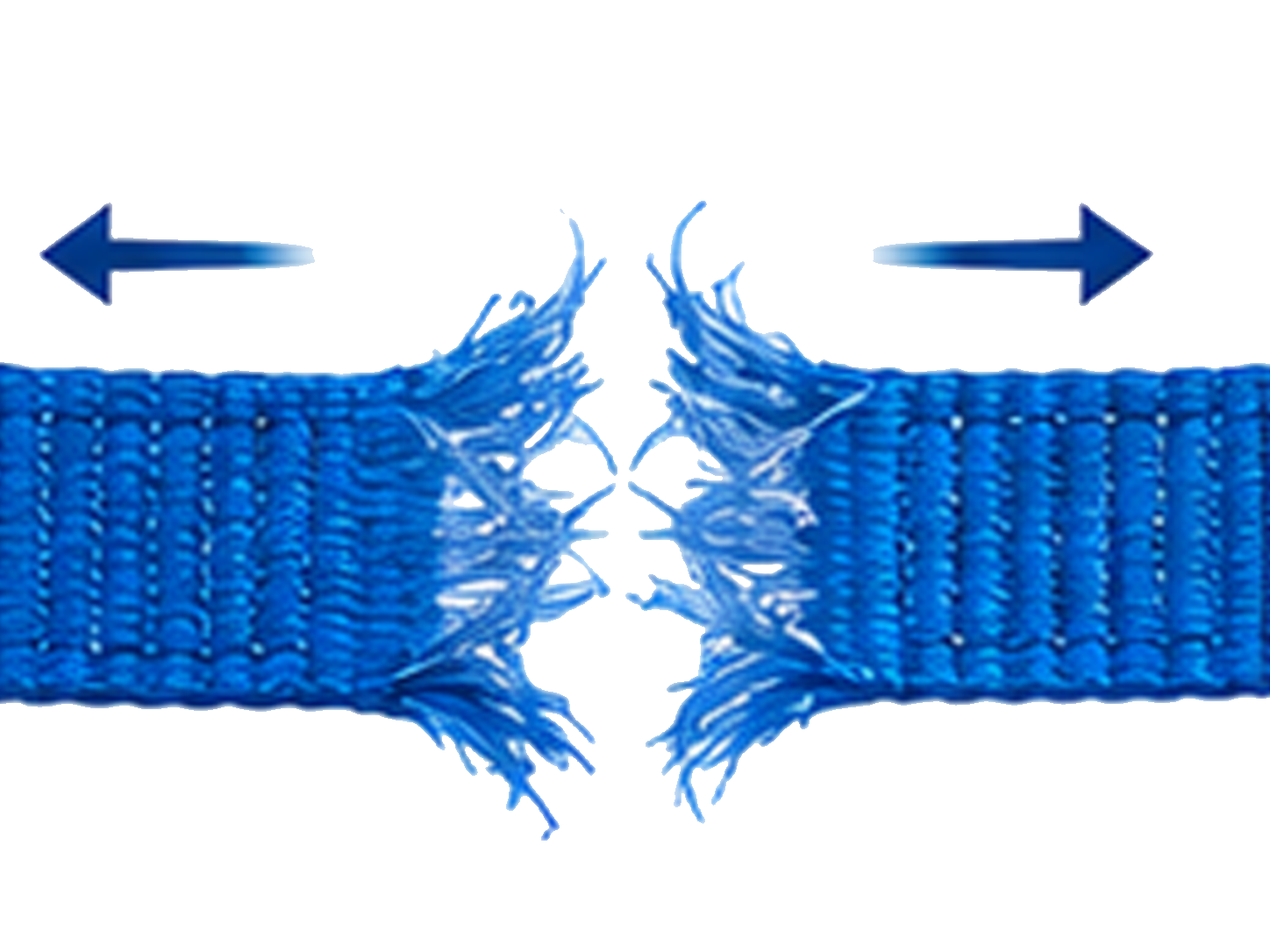
Break Force
Break force is the force at which the strap or assembly fails during destructive testing. MDI may quote a break-force figure to describe the overall strength class of a product, but it must not be treated as the allowable force for normal load restraint.
Do not use break force as a substitute for LC when determining restraint capacity.

BS EN 12195-2
BS EN 12195-2:2001 is the current British Standard covering safety requirements for reusable web lashings made from man-made fibres for the safe surface transport of goods.
It covers requirements for the webbing, tensioning and connecting components, testing, marking and information for use.
Always choose a ratchet strap with an LC (Lashing Capacity) that is suitable for your load and application. When in doubt, choose higher.

All MDI ratchet straps comply with BS EN12195-2 for professional and reliable load restraint.
Frequently asked questions
Answers to some of the most common questions about choosing, using and looking after ratchet straps.
What is the difference between LC and break force?
LC, or Lashing Capacity, is the rated force that a ratchet strap is designed to sustain in normal lashing use. Break force is the force at which the strap or assembly fails during testing.
Break force is therefore significantly higher than the normal rated lashing capacity and should not be treated as the working capacity of the strap. When assessing a ratchet strap for load restraint, use the LC shown on its identification label.
What does STF mean on a ratchet strap?
STF means Standard Tension Force. It describes the residual tension produced in the webbing after the ratchet is operated using the specified Standard Hand Force.
STF is particularly important for tie-down restraint because the tension in the strap creates downward clamping force, increasing friction between the load and the supporting surface.
What does SHF mean?
SHF means Standard Hand Force. It is the reference force applied to the ratchet handle when the tensioning performance of the lashing system is assessed.
For ratchet lashings covered by EN 12195-2, the standard reference hand force is 50 daN. SHF is not the load capacity of the strap.
How tight should a ratchet strap be?
A ratchet strap should be tensioned sufficiently to provide the restraint required for the load and restraint method being used, without overloading the strap, ratchet, anchor points or load.
Pull most of the slack through by hand before operating the ratchet. Do not use a pipe, bar or other extension to obtain additional leverage on the handle.
How much webbing should be wound around the ratchet spindle?
Only enough webbing should be wound onto the spindle to tension the strap securely. Pull excess slack through the spindle by hand before beginning to ratchet.
Too much webbing around the spindle can cause the mechanism to become overfilled and may prevent the ratchet from operating or closing correctly.
Can a ratchet strap be twisted?
The webbing should normally be kept flat throughout the restraint route. Twisted webbing can sit unevenly, concentrate loading and create additional wear.
Before tensioning, check that the webbing runs flat over the load and between the end fittings and ratchet.
Can ratchet straps be used over sharp edges?
Webbing should not be allowed to bear directly against an edge that could cut, crush or abrade it. Suitable corner or edge protection should be used where necessary.
Edge protection should sit between the webbing and the load so that the strap does not make direct contact with the damaging surface.
How often should ratchet straps be inspected?
Inspect a ratchet strap before use and check it again after the job, particularly if it has been exposed to heavy loads, abrasion, dirt, moisture or harsh working conditions.
Check the webbing, stitching, identification label, ratchet mechanism and end fittings. Equipment showing significant damage or defects should be removed from service.
What does EN 12195-2 mean?
EN 12195-2 is the European standard covering web lashings made from man-made fibres used for securing loads on road vehicles.
It includes requirements relating to the lashing assembly, performance, testing, identification and marking. The strap's identification label provides important information about its rated characteristics.
Can ratchet straps be used for lifting?
No. Ratchet straps are designed for load restraint, not lifting.
They must not be used to lift, suspend or support a load. Where lifting is required, use suitable lifting equipment designed and rated specifically for that purpose.
Popular ratchet strap ranges
Browse some of the most commonly selected MDI ratchet strap ranges, or use the guide above to narrow the choice by strength, fitting and application.

800kg Ratchet Straps
Compact and easy to handle for lighter commercial and transport applications.

1500kg Ratchet Straps
A versatile medium-duty range for vans, trailers and general commercial restraint.

3000kg Ratchet Straps
A stronger commercial option with standard, endless and stainless-steel configurations available.

5000kg Ratchet Straps
Heavy-duty 50mm restraint systems with a wide choice of fittings and specialist options.