
RATCHET STRAP BUYING GUIDE
Choosing the Right Ratchet Strap
The complete guide to selecting the correct strength, length, ratchet, webbing and end fitting for your load.
Choosing the correct ratchet strap isn't simply a matter of selecting the highest break force. The load, restraint method, anchor points, strap length, end fittings and working environment all affect which strap is right for the job. This guide explains the options available and helps you identify the most appropriate ratchet strap for your application.
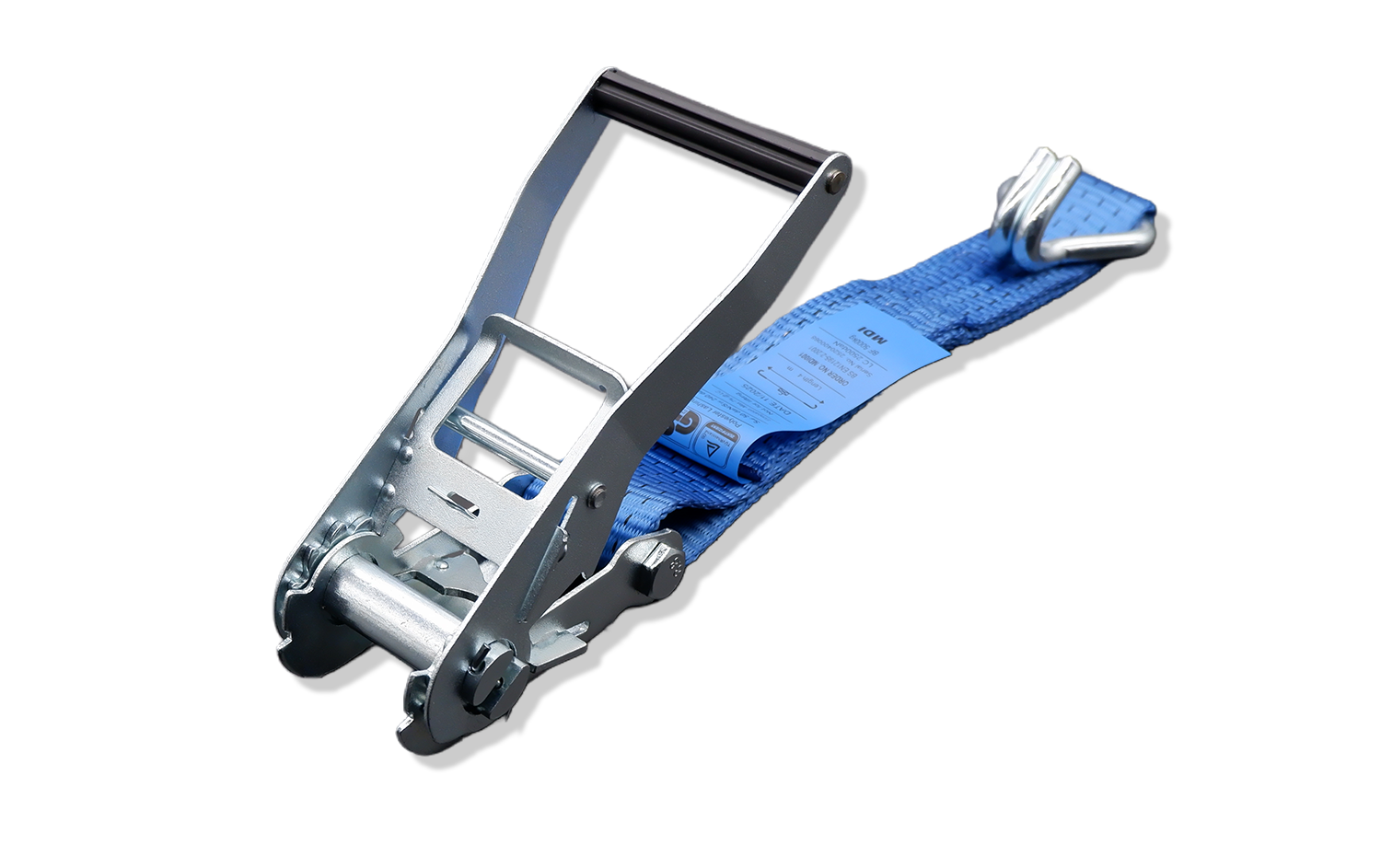
Complete MDI Range
Every principal ratchet strap configuration explained.

Technical Guidance
Strength, LC, STF, fittings and restraint method.

Product Examples
Direct links to the right MDI ranges and strap types.

Reviewed
Reviewed by the MDI load-restraint team.
Six questions to answer before choosing a ratchet strap
Answering these six questions will quickly narrow the choice to the right strap type, strength, fitting and length for the job.

What are you securing?
Identify the type, shape and dimensions of the load before choosing the restraint system.

How heavy and large is it?
The size and mass of the load influence the rating, strap width and restraint method required.
How will it be restrained?
Decide whether the strap will tie the load down, provide direct restraint or bundle items together.

What anchor points are available?
Check that suitable anchor points exist and that the chosen hooks or fittings are compatible with them.
How long must the strap be?
Allow enough webbing for the intended route, threading and tensioning without excessive loose tail.

Where will it be used?
Consider wet, corrosive, high-visibility or presentation-sensitive environments before selecting the final configuration.
Do not choose a ratchet strap from break force alone
Break force is only one measure of a ratchet strap's strength. For professional load restraint, the working system also depends on the strap's Lashing Capacity (LC), Standard Tension Force (STF), the restraint method, lashing angles, anchor points and the condition of the complete assembly.
A strap described commercially as “5000kg” does not mean that one strap can automatically secure any load weighing up to 5000kg.
Choose a ratchet strap by strength
Ratchet straps are available in a wide range of strength classes. The right choice depends on the load, restraint method and application—not simply the largest break-force figure.
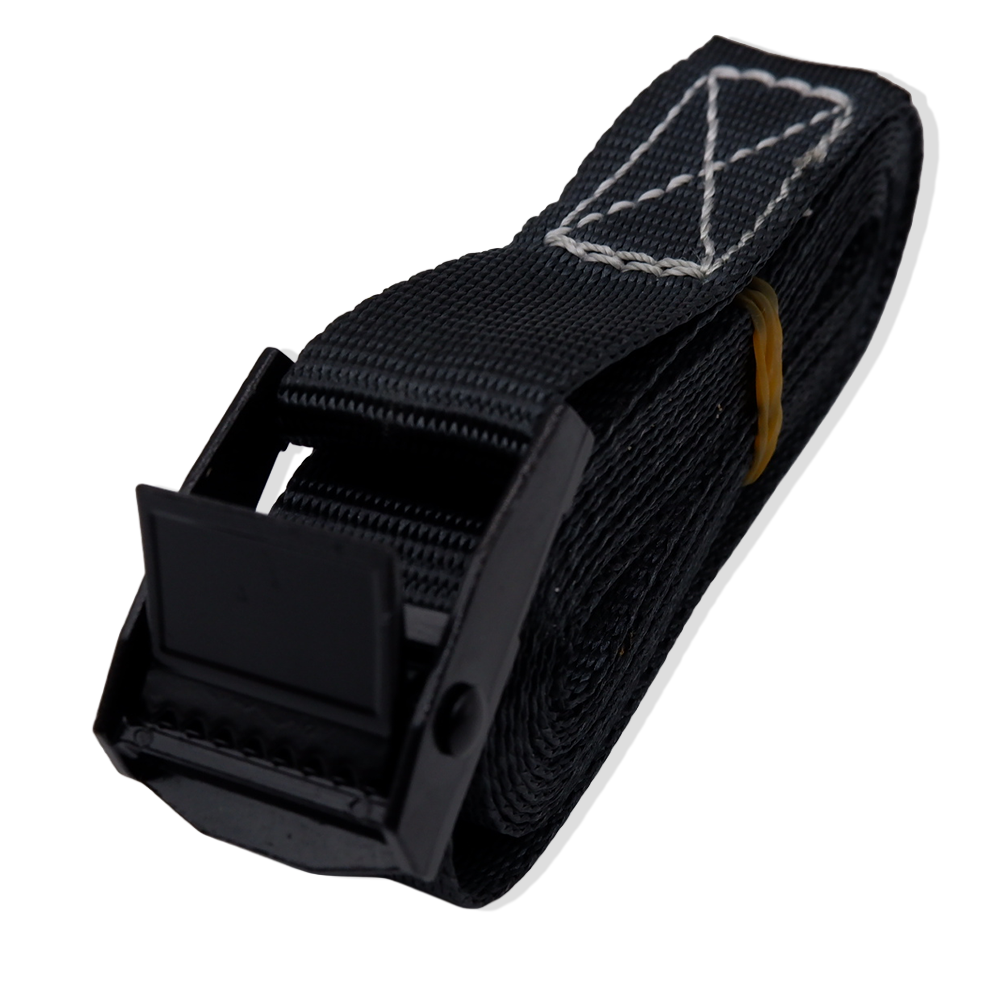
250kg Cam Buckle Straps
A compact option for lighter restraint and bundling applications where high ratchet tension is unnecessary. Cam buckle straps are quick to use and well suited to cases, boxes, lightweight equipment and delicate loads.
Best suited to: light-duty restraint, bundling and equipment that may be damaged by excessive tension.
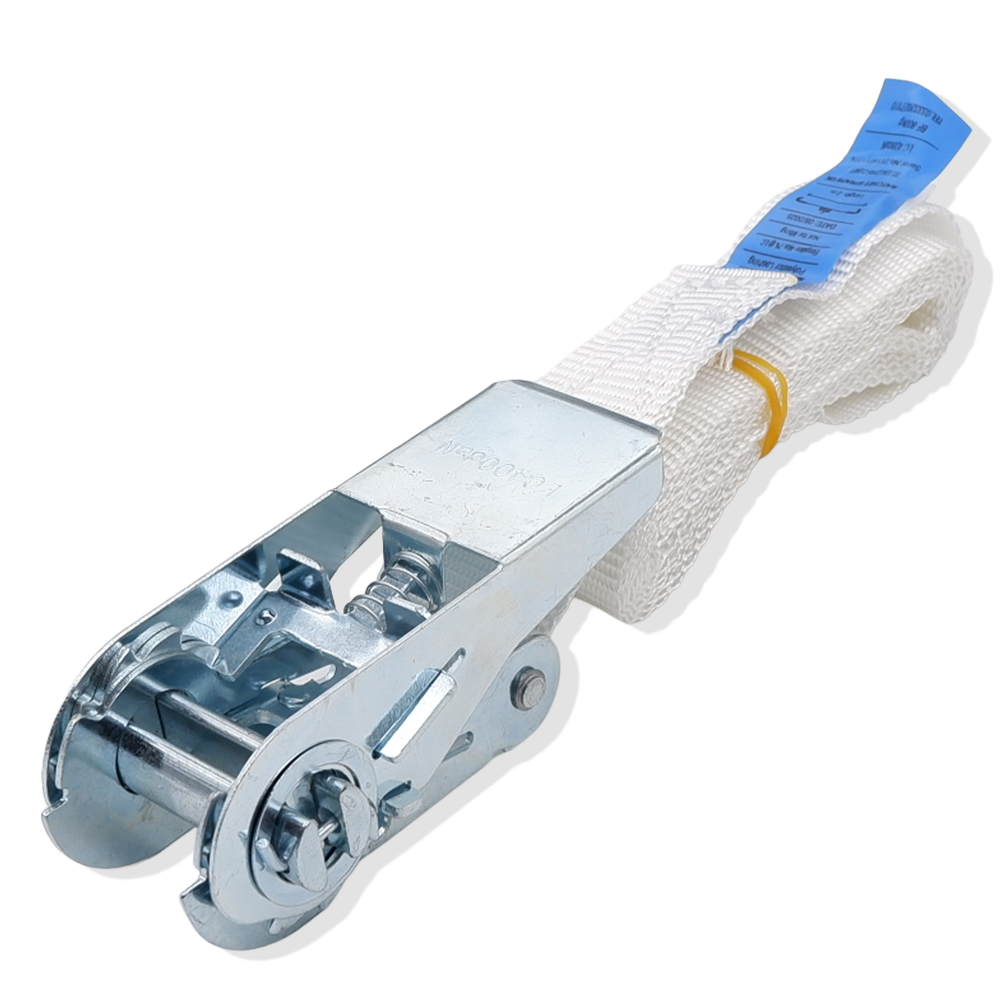
800kg Ratchet Straps
Compact and easy to handle, 800kg ratchet straps are useful for lighter commercial loads, van applications, trailers and general-purpose restraint where a larger 50mm strap would be unnecessary.
Best suited to: lighter commercial loads, vans, trailers and compact restraint applications.
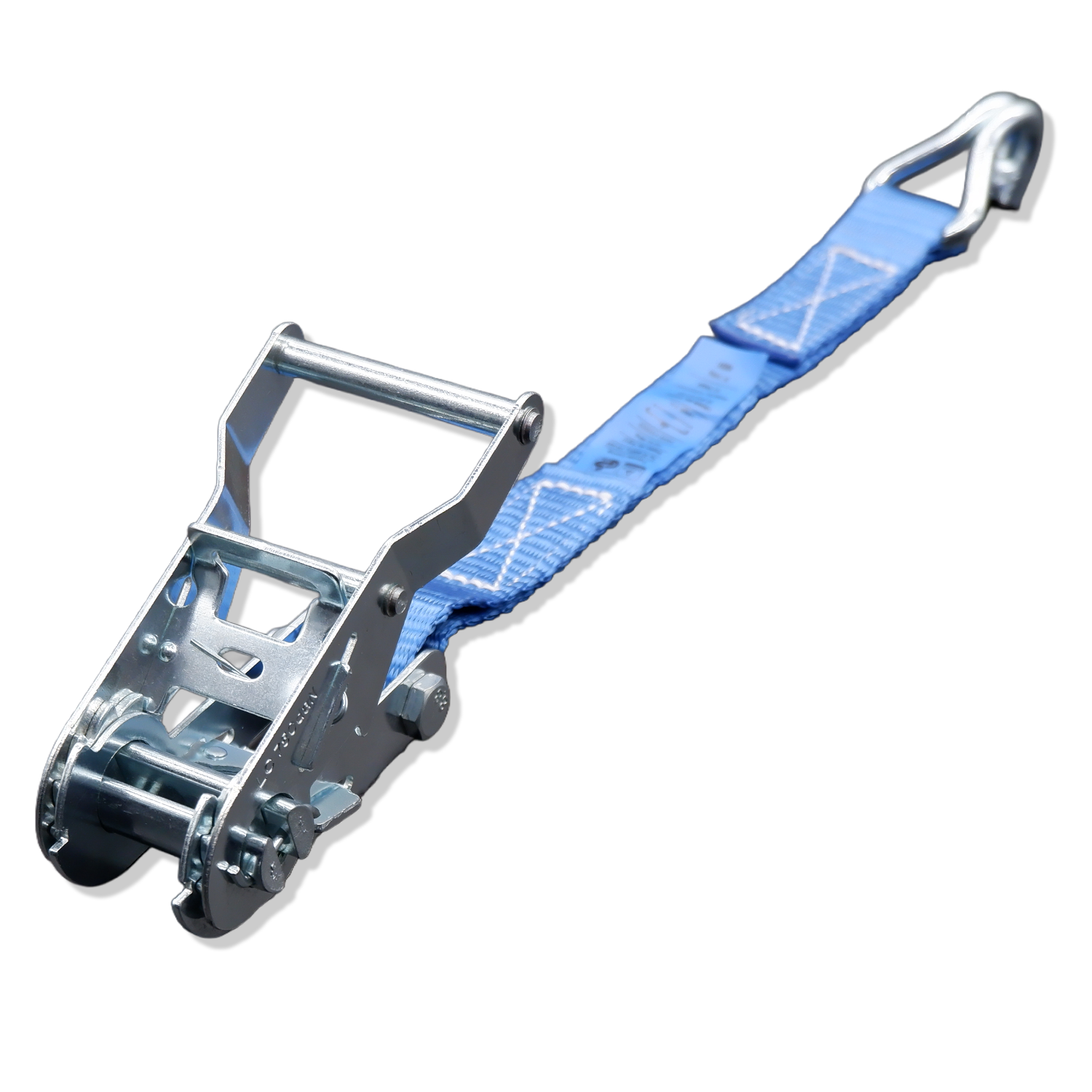
1500kg Ratchet Straps
A versatile medium-duty option suitable for many commercial and transport applications. Depending on the configuration, this range can include conventional hooks, snap-hook fittings and endless versions.
Best suited to: general transport, workshop use, vans and medium-duty commercial restraint.
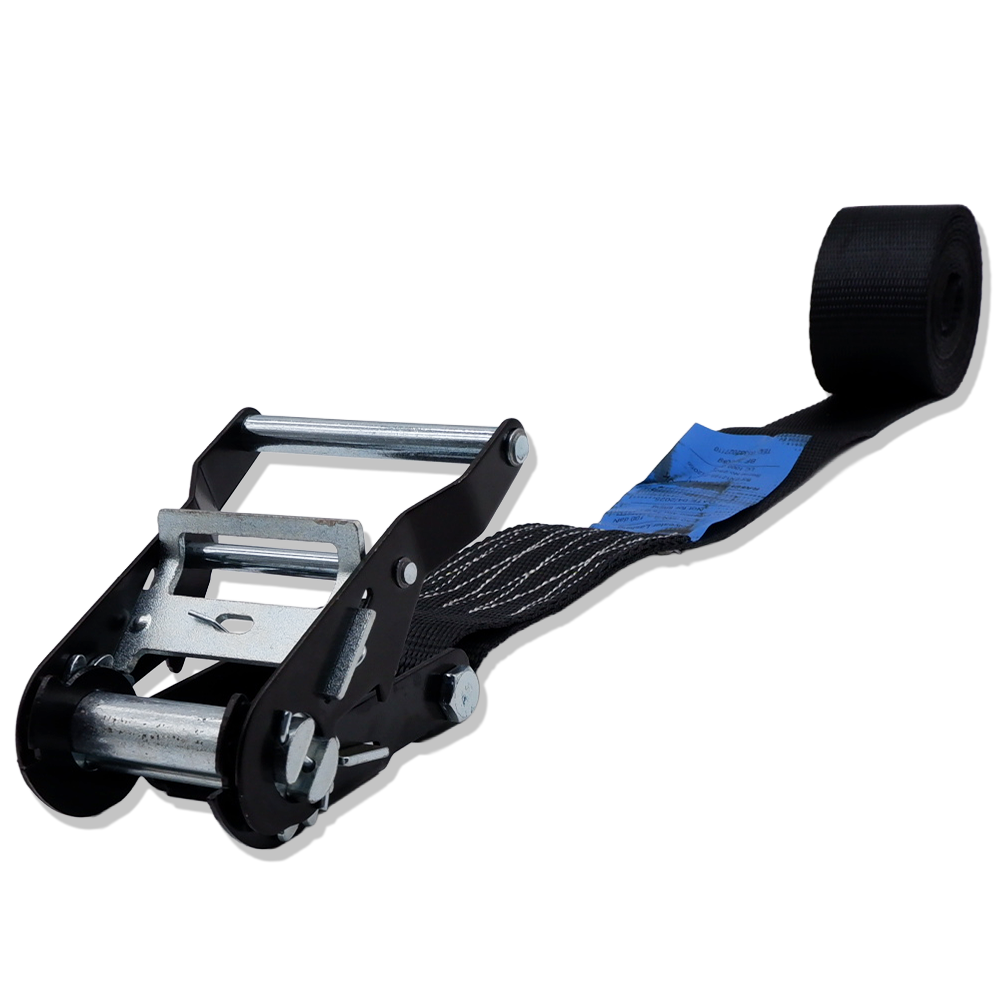
2000kg Ratchet Straps
A step up in strength while still remaining relatively compact, 2000kg ratchet straps suit heavier medium-duty applications and are available in both hooked and endless configurations.
Best suited to: heavier van and trailer work, medium-duty commercial loads and bundling.
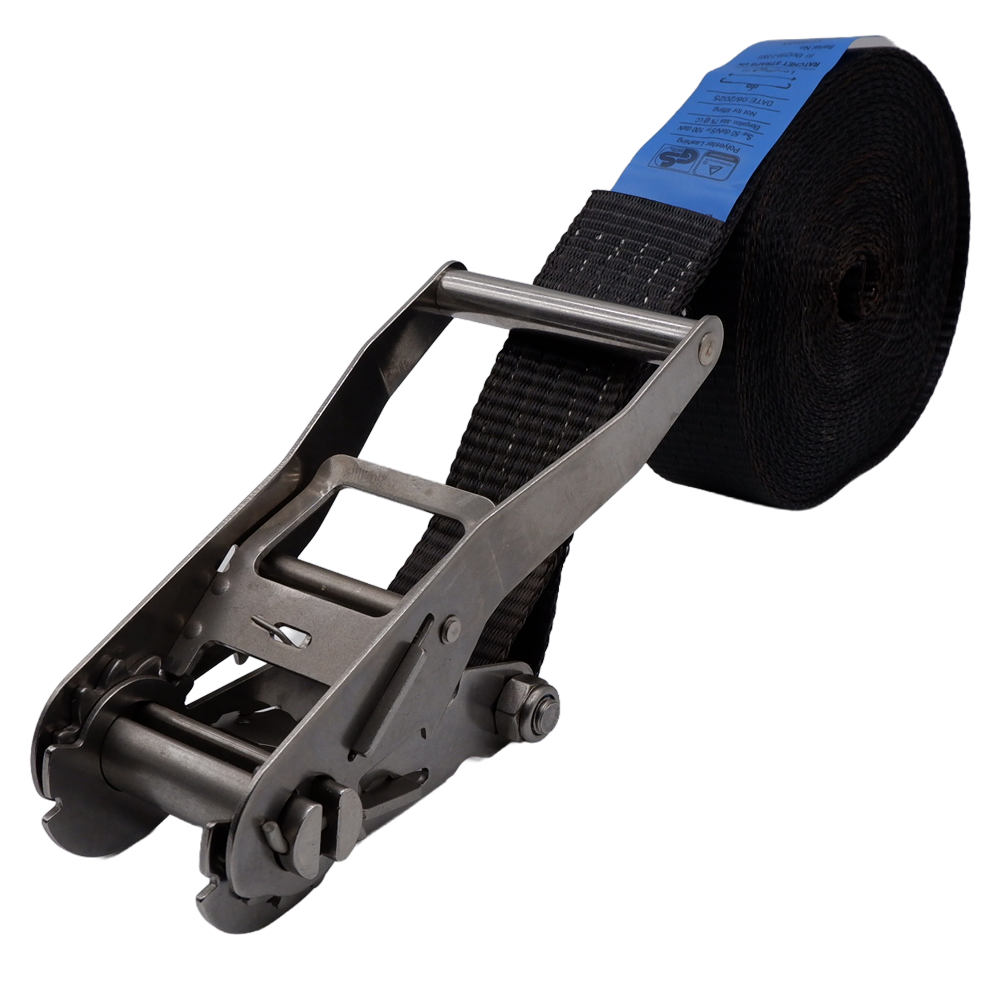
3000kg Ratchet Straps
Designed for more demanding commercial restraint, the 3000kg class is a useful option where lighter straps are insufficient but a full 5000kg assembly would be excessive. Stainless-steel versions are also available for more corrosive environments.
Best suited to: heavier commercial loads, industrial restraint and the stainless steel ratchets for wet or corrosive environments.
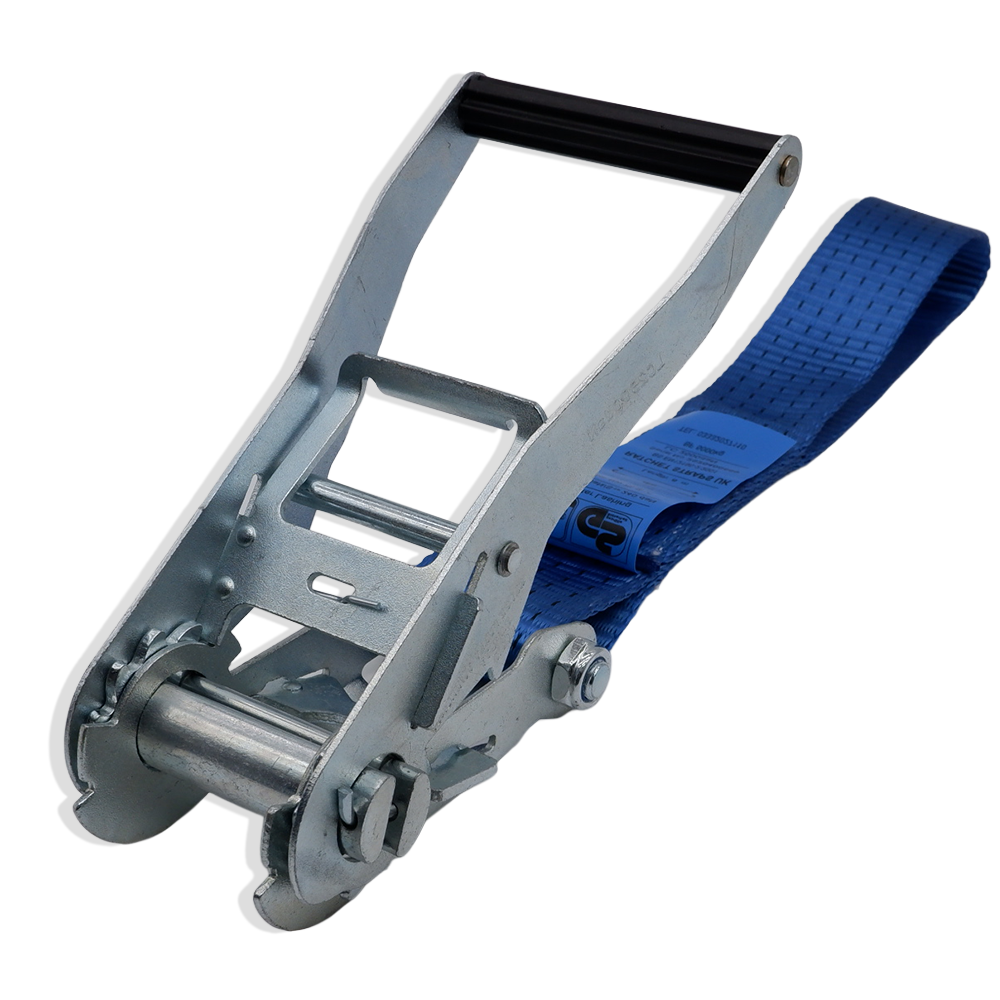
5000kg Ratchet Straps
The 50mm 5000kg ratchet strap is one of the most widely used heavy-duty commercial restraint systems. MDI offers multiple configurations including Double J hooks, endless straps, twisted snap hooks, chassis or rave hooks, D rings, looped ends, ergonomic ratchets and high-visibility options.
Best suited to: heavier commercial loads, industrial restraint and the stainless steel ratchets for wet or corrosive environments.
Which ratchet strap hook do I need?
The end fitting is just as important as the strap strength. Choose a fitting that matches the available anchor point and allows the webbing to run naturally without twisting or loading the hook incorrectly.

Double J Hook
The most common general-purpose fitting for trailers, flatbeds and many vehicle anchor points.

Chassis / Rave Hook
Designed for compatible vehicle chassis or rave attachment points where a standard hook is unsuitable.

Flat Snap Hook
A positively retained fitting useful where accidental disengagement needs to be reduced.
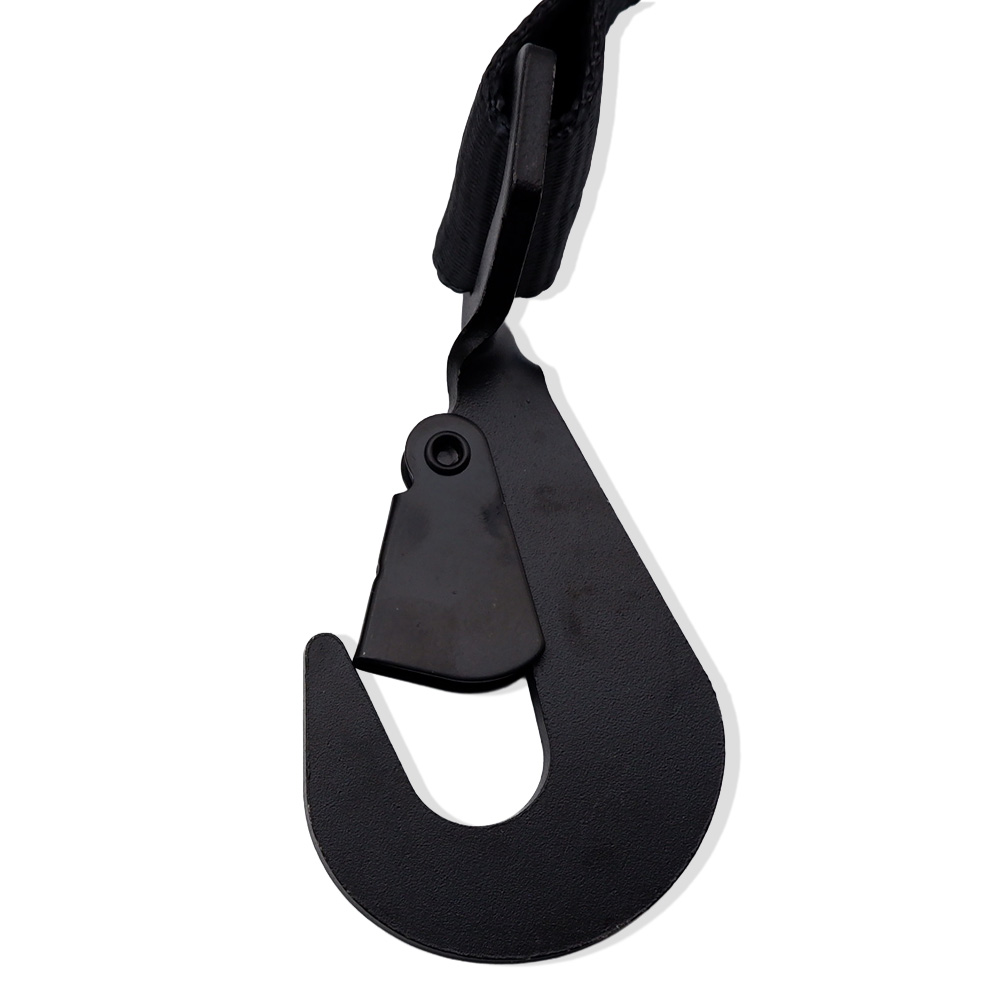
Twisted Snap Hook
Changes the fitting orientation so the webbing can sit more naturally against certain anchor points.
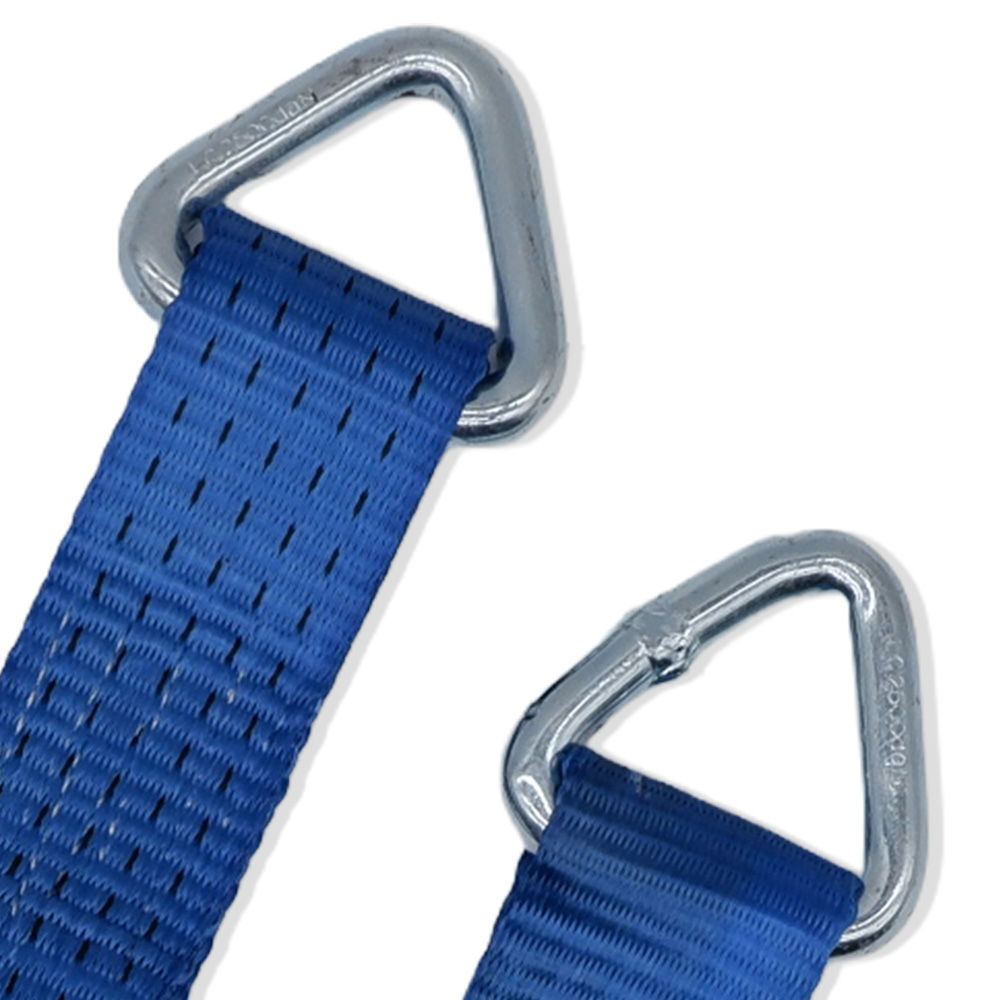
D / Delta Ring
Useful where a ring fitting is more appropriate than a hook or forms part of a particular restraint arrangement.

Looped End
A soft connection option for suitable structures where a metal hook could be awkward or damage a surface.

E-Track Fitting
For vans and commercial vehicles fitted with compatible E-track or internal cargo tracking.
Endless — No Hook
The webbing loops around the load and feeds back into the ratchet, making it ideal for bundling and many wrap-around applications.
Specialist strap types
Some applications call for more than a standard two-part hooked strap. Endless, ergonomic, stainless-steel and internal cargo systems solve different practical problems and are worth choosing when the application demands them.

Endless Ratchet Straps
Endless straps have no separate end hooks. The webbing forms a loop around the load and feeds back through the ratchet, making them ideal for bundling, wrapping and securing grouped items.

Ergonomic Ratchet Straps
Ergonomic ratchets use a longer handle and a different tensioning action, helping operators apply controlled pre-tension more comfortably during frequent commercial use.
Stainless-Steel Ratchet Straps
Stainless-steel hardware is especially useful in wet, marine and more corrosive environments where improved resistance to corrosion is important.

Internal & Curtainsider Straps
Internal cargo and curtainsider systems are designed for compatible vehicle interiors and tracking systems where loads need to be restrained inside the body rather than simply lashed over externally.
Choosing a ratchet strap by colour
Colour does not determine a ratchet strap's strength, but it can make the right product easier to identify, more discreet in presentation-sensitive environments or more visible in working areas.

Blue Ratchet Straps
The standard commercial choice across a wide range of transport, industrial and general load-restraint applications.

Black Ratchet Straps
A discreet option for events, exhibitions, production environments and applications where bright webbing would be visually intrusive.

White Ratchet Straps
Useful where the restraint needs to blend with light-coloured equipment, marquees or presentation-sensitive installations.

Hi-Vis Ratchet Straps
Designed to stand out around vehicles, loading areas and low-light working environments where visibility is useful.
Always choose the strap by its rating, configuration and intended use. Webbing colour is a practical or visual consideration, not a substitute for the technical specification.
How long should a ratchet strap be?
Choose a strap that is long enough to follow the intended restraint route and reach both suitable anchor points, while still leaving enough webbing to thread and tension the ratchet correctly. Excessively long straps can be awkward to handle, while a strap that is too short may not engage or tension correctly.
A simple rule: measure the complete restraint route before ordering. Allow for the distance between anchor points, the route over or around the load and enough additional webbing for secure threading and tensioning.
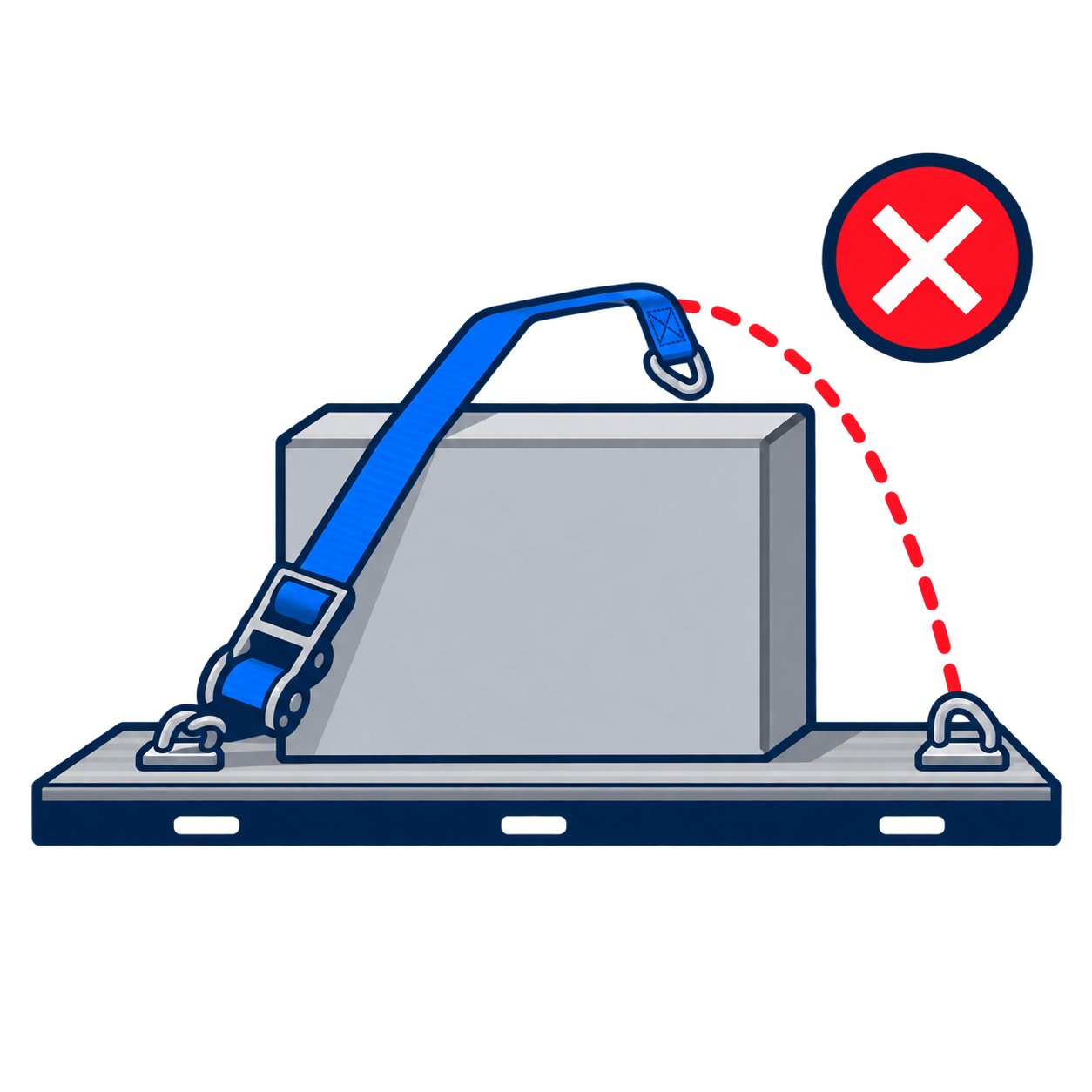
Too Short
The strap cannot follow the required route, reach both suitable anchor points or leave enough webbing to engage and tension the ratchet correctly.
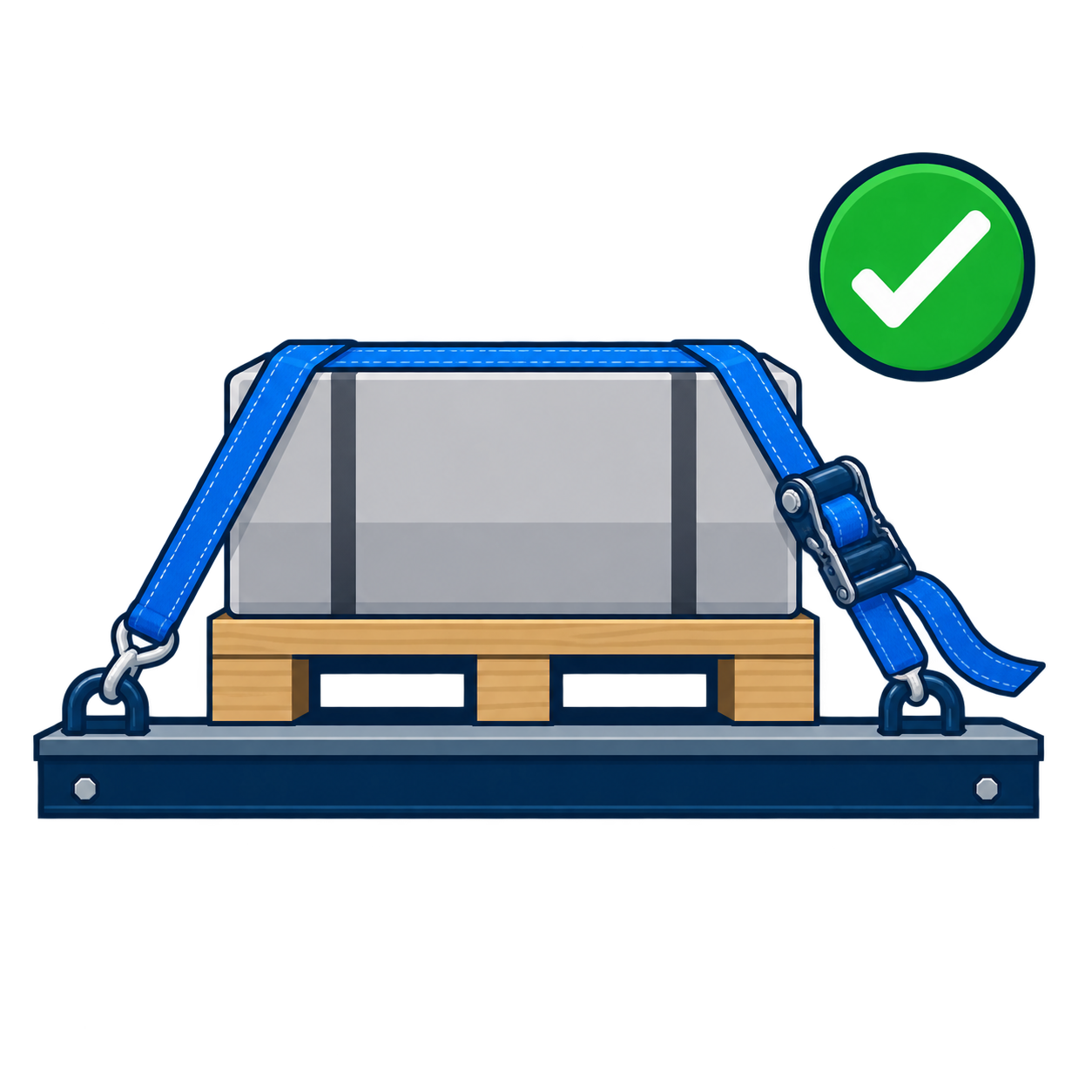
Correct length
The strap reaches the intended anchor points comfortably, follows the planned restraint route and leaves enough webbing for correct threading and tensioning without excessive loose tail.
Too long
The restraint may still function correctly, but unnecessary excess webbing makes handling slower and creates a longer loose tail that must be secured safely.
Before ordering, check these four things
- Anchor-to-anchor route — measure the actual path the strap needs to follow.
- Load dimensions — allow for the strap passing over or around the load.
- Ratchet position — make sure the ratchet will sit somewhere accessible for tensioning and release.
- Free webbing — allow enough additional webbing for threading, but avoid buying substantially more length than the application requires.
Do not knot a ratchet strap to shorten it. If a strap is substantially longer than required, use a more appropriate length or secure the loose tail correctly after tensioning.
Start with the job
If you already know what you are securing, use these starting points to narrow the choice. Always confirm the final strap rating, fitting and restraint method before use.
Light or delicate loads
For lighter equipment, boxes, cases or loads that could be damaged by excessive tension, start with cam buckle or lighter-duty ratchet straps.
General van and trailer loads
For everyday van, trailer and light commercial restraint, the 800kg to 1500kg ranges are often the most practical starting point.
Commercial transport loads
For heavier commercial freight, plant and machinery, consider the 1500kg to 5000kg ranges depending on the calculated restraint requirement.
Bundling items together
Where you need to wrap around a load rather than connect two separate anchor points, an endless ratchet strap is usually the most suitable configuration.
Marine & wet environments
Where corrosion resistance matters, consider stainless-steel ratchet assemblies while continuing to inspect the polyester webbing normally.
High visibility or frequent use
Choose hi-vis webbing where visibility is important, or an ergonomic ratchet where operators regularly tension straps during commercial use.
Popular ratchet strap ranges
Browse some of the most commonly selected MDI ratchet strap ranges, or use the guide above to narrow the choice by strength, fitting and application.

800kg Ratchet Straps
Compact and easy to handle for lighter commercial and transport applications.

1500kg Ratchet Straps
A versatile medium-duty range for vans, trailers and general commercial restraint.

3000kg Ratchet Straps
A stronger commercial option with standard, endless and stainless-steel configurations available.
5000kg Ratchet Straps
Heavy-duty 50mm restraint systems with a wide choice of fittings and specialist options.
Frequently asked questions
Answers to some of the most common questions about choosing ratchet straps, understanding ratings and selecting the right configuration.
What strength ratchet strap do I need?
The correct strength depends on the load, restraint method, lashing arrangement and anchor points. Do not select a strap solely from the advertised break-force figure. For commercial load restraint, consider the strap's Lashing Capacity (LC), Standard Tension Force (STF) where relevant, and the complete restraint system.
Is break force the same as safe load?
No. Break force is the force at which the strap assembly is expected to fail under test conditions. It is not a universal safe load or a statement that one strap can secure a load of the same weight. Use the rated LC, STF and appropriate restraint calculation instead.
What does LC mean on a ratchet strap?
LC means Lashing Capacity. It is one of the key rated values used when assessing a strap for direct load restraint. The LC should be read from the strap label and considered alongside the restraint geometry, anchor points and overall system.
What length ratchet strap should I buy?
Measure the complete route the strap needs to follow between suitable anchor points, including the distance over or around the load. Choose enough length for secure threading and tensioning without creating an unnecessarily long loose tail.
Are endless ratchet straps better than hooked straps?
Neither is universally better. Endless straps are particularly useful for bundling or wrapping around a load, while two-part hooked straps are usually more appropriate where the restraint needs to connect directly to separate anchor points.
Which ratchet strap hook should I choose?
Choose the end fitting that correctly matches the available anchor point. Double J hooks suit many general transport applications, while chassis hooks, snap hooks, D rings, E-track fittings and looped ends are useful for more specific attachment arrangements.
When should I use a stainless-steel ratchet strap?
Stainless-steel hardware is useful in wet, marine and more corrosive environments where improved corrosion resistance is valuable. The webbing still needs normal inspection and protection from cuts, abrasion and contamination.
What is an ergonomic ratchet strap?
An ergonomic ratchet uses a longer handle and a different tensioning action to make repeated commercial use more comfortable and, depending on the product, provide a different level of pre-tension. Always use the rating shown on the specific strap label.
Does ratchet strap colour affect strength?
No. Webbing colour is mainly a practical or visual consideration. Blue is commonly used for general commercial applications, black is useful where a discreet appearance matters, and hi-vis colours can improve visibility. Always select by rating and configuration rather than colour.
Can ratchet straps be used for lifting?
No. Ratchet straps are load-restraint equipment and must not be used to lift, suspend or support a load. Use correctly rated lifting equipment for lifting operations.